
Roller conveyors and turnkey conveyor systems: improving internal logistics
A box is removed from a packing station, carried 10 or 15 metres to a storage area and placed down. The operator walks back and repeats the same process hundreds of times during a shift.
For the employee, it is simply part of the job. For the company, it represents hours of paid labour spent on an operation that adds no value to the product.
This is why internal material handling is often one of the most practical areas to automate.
For boxes, plastic containers, crates, pallets and other loads with a stable base, one of the simplest solutions is a roller conveyor.
More than moving a box from A to B
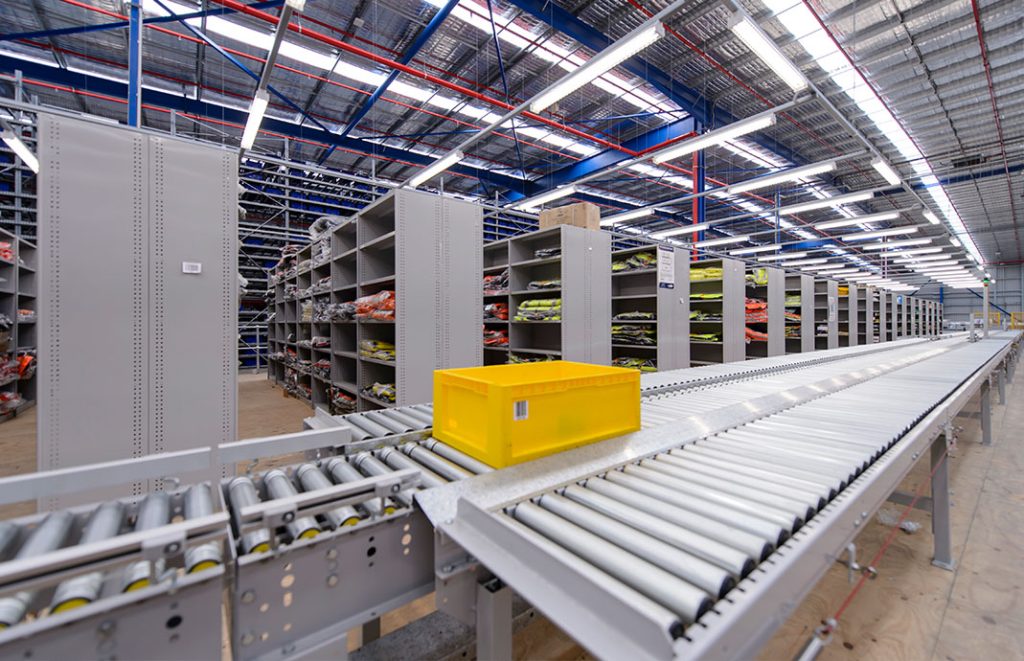
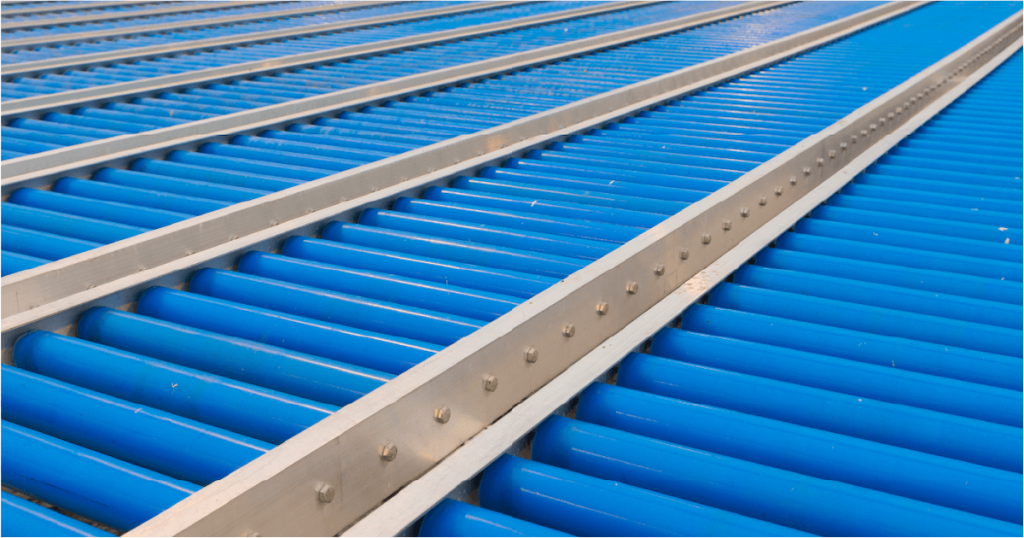
A roller conveyor consists of a series of rollers that support and move the load.
Its role, however, can extend far beyond basic transportation.
A properly designed roller conveyor system can:
- connect production processes;
- transfer cartons between workstations;
- create accumulation buffers;
- feed products to operators;
- transport goods to weighing or scanning stations;
- connect packaging equipment to dispatch areas;
- become part of an automated sorting system.
This is why a conveyor should not be specified by length alone.
The first question should be: where is time currently being lost in the material flow?
The hidden cost of manual handling
Suppose moving one box and returning to the workstation takes 25 seconds.
For 800 boxes per shift:
800 × 25 seconds = approximately 5.6 hours.
The work may be shared between several employees, but the total amount of labour remains the same.
Installing a roller conveyor between two permanent workstations removes much of this unnecessary walking. The operator places the box on the conveyor and immediately returns to productive work.
Small improvements like this can have a significant impact without requiring complex robotics.
Powered and gravity roller conveyors
A gravity roller conveyor is the simplest option.
Products are moved manually or by gravity when the conveyor is installed at a slight incline. These systems work well around packing stations, order picking zones, receiving areas and dispatch points.
A powered roller conveyor is used when products need to move automatically.
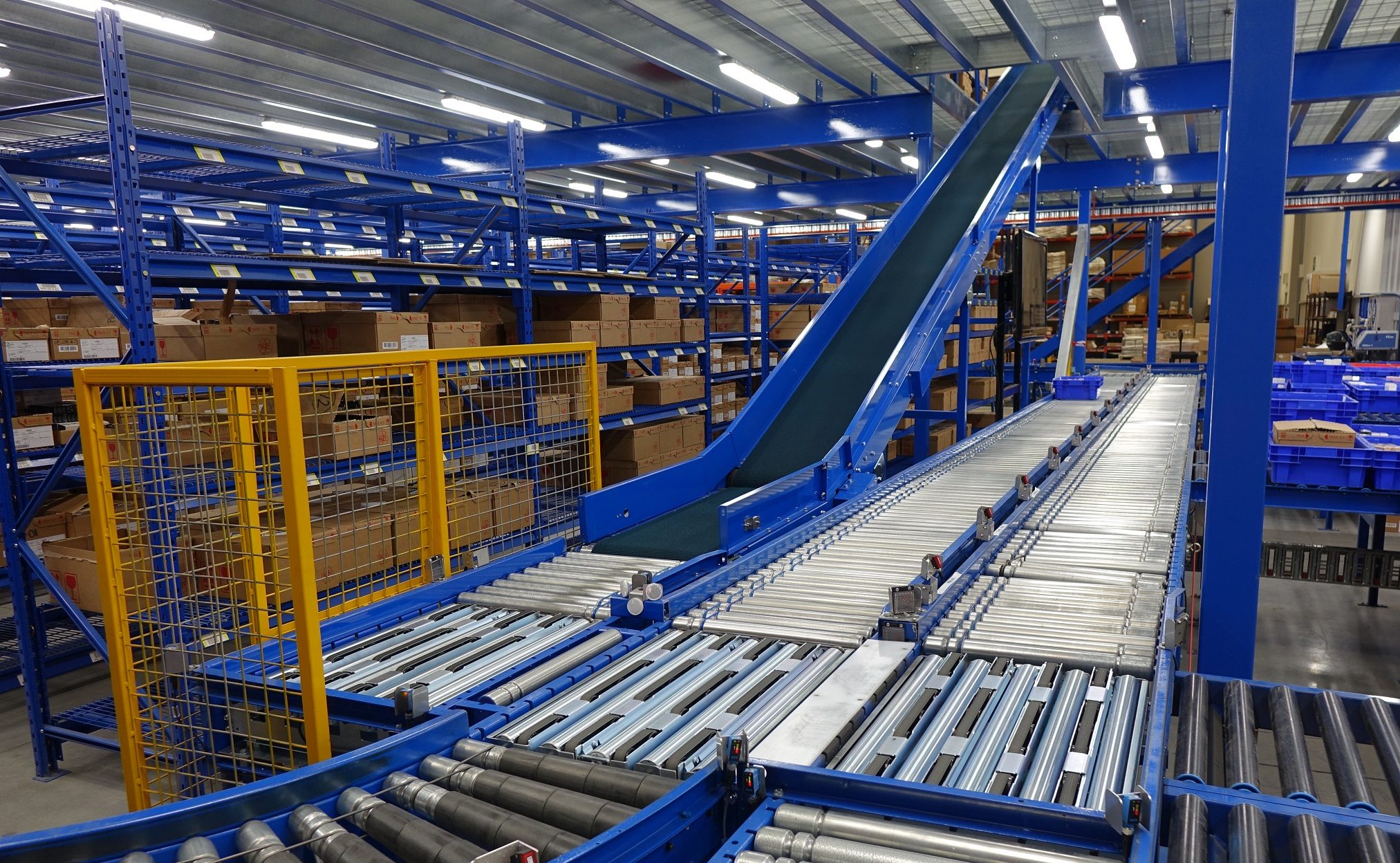
It can provide controlled speed, automatic stopping, accumulation zones and integration with sensors, barcode scanners, weighing systems and other machinery.
Why the smallest box matters
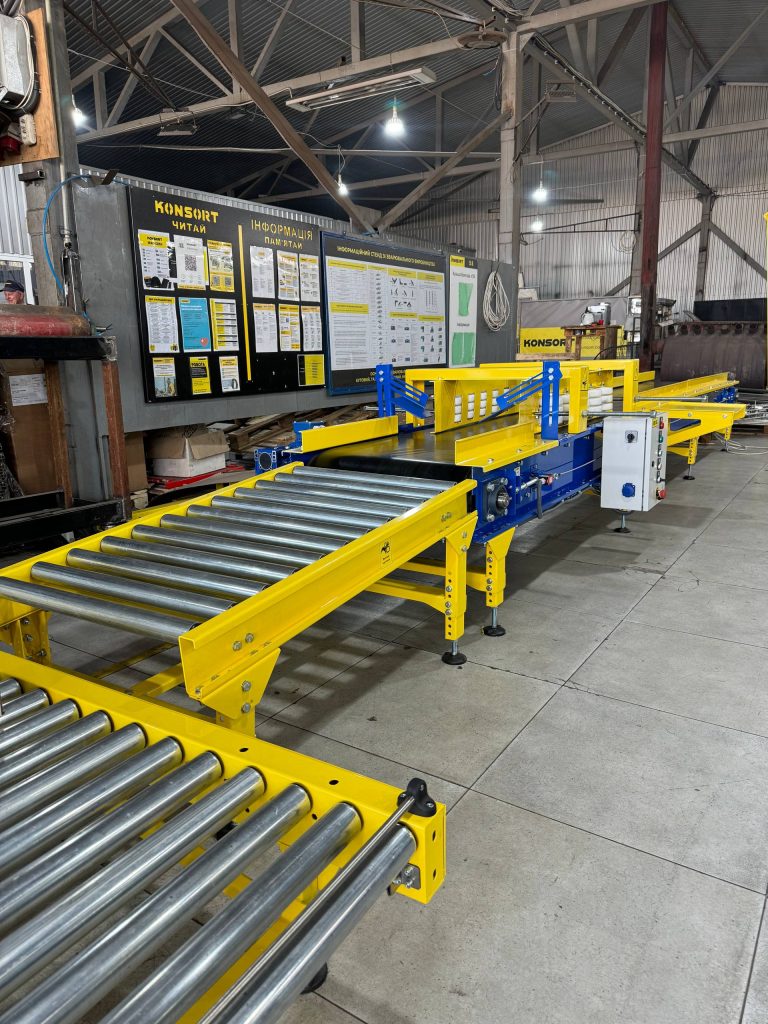
The maximum load is not the only parameter that matters when designing a roller conveyor.
The minimum product size can be just as important.
A box should remain supported by several rollers during transportation. If the roller pitch is too large, smaller packages may tilt or become unstable.
Engineering therefore starts with:
- minimum and maximum dimensions;
- product weight;
- bottom surface and rigidity;
- required throughput;
- conveyor speed;
- integration with upstream and downstream equipment.
From one conveyor to a complete logistics system
One of the advantages of roller conveyor technology is scalability.
A company may start with a few metres of conveyor between packing and storage.
Later, the system can develop into:
roller conveyor → barcode scanner → weighing → accumulation → sorting → dispatch.
The same principle can therefore support both a small production line and a large distribution centre.
KONSORT designs and manufactures powered and gravity roller conveyors, flexible expandable conveyors, roller inspection tables, conveyor lines for boxes and complete material handling systems.
Where roller conveyors are used
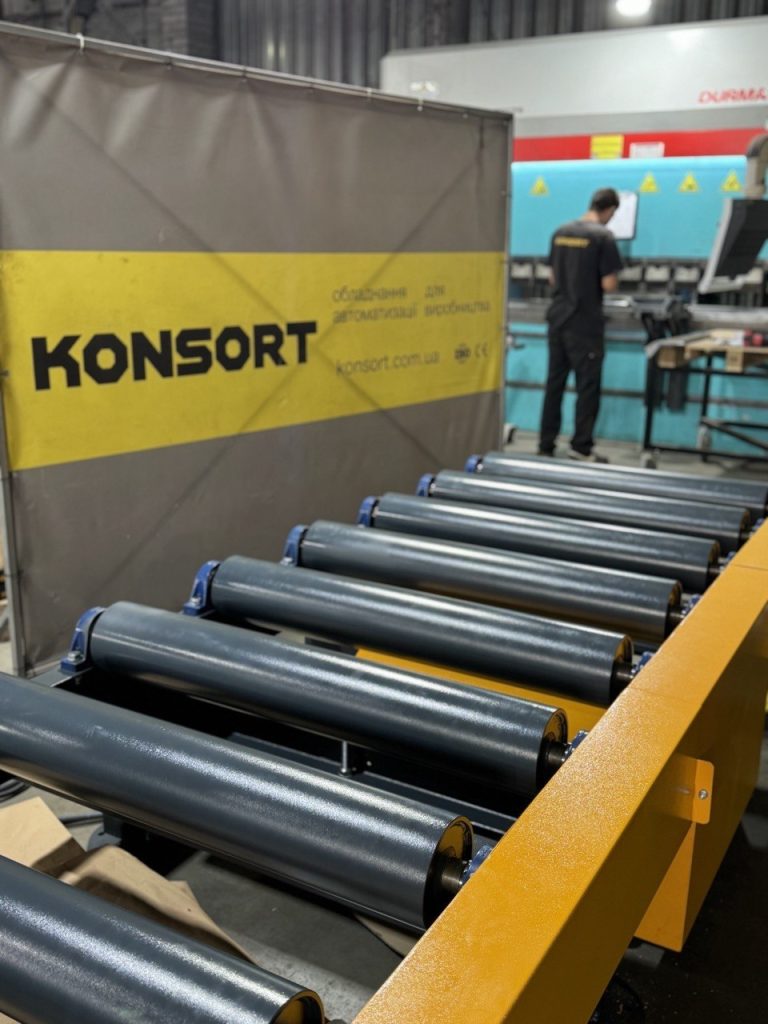
Roller systems are widely used in:
- warehouses;
- e-commerce fulfilment;
- parcel sorting;
- food manufacturing;
- pharmaceuticals;
- component manufacturing;
- printing and publishing;
- furniture production;
- distribution centres;
- packaging lines.
Wherever the same type of load repeatedly follows the same route, there is usually an opportunity to improve the process.
Start with the repeated movement
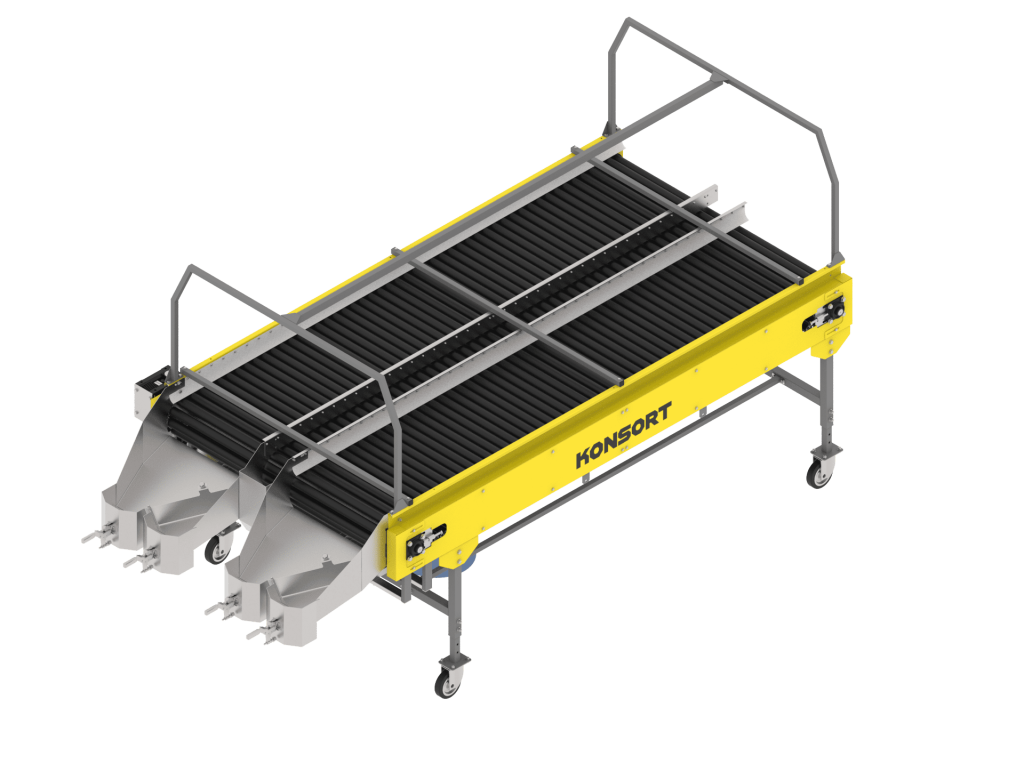
A useful rule is simple: if an employee carries the same type of product along the same route dozens or hundreds of times during a shift, the operation is worth analysing.
Automation does not necessarily mean installing a large automated warehouse.
Sometimes a few metres of properly designed roller conveyor can remove hundreds of unnecessary movements every day.
Manufacturing companies like to talk about robotics, artificial intelligence, automated warehouses and sorting systems. Yet between two modern machines there may still be a person manually carrying a box. As long as that is happening, the best investment may be much simpler than a robot.
Real automation often starts with these small, repetitive processes.
KONSORT develops roller conveyors and complete conveyor systems around the actual product, required throughput and facility layout — from a single workstation to a complete internal logistics system.