
Affordable conveyor automation: 10 simple solutions that improve production efficiency
Meta title: Affordable conveyor automation for manufacturing, warehouses and agriculture | KONSORT
Meta description: Discover practical conveyor solutions that reduce manual handling, improve internal logistics and increase productivity. Belt, roller, telescopic and vertical conveyors by KONSORT.
Why automation doesn’t always require a major investment
Many companies postpone automation because they believe it requires expensive robotic systems or fully automated production lines.
In reality, some of the biggest productivity gains come from much simpler improvements.
Every day, employees spend valuable time moving boxes, containers, raw materials and finished products between workstations. These repetitive tasks do not add value to the product, yet they consume labour hours, create bottlenecks and slow down production.
A well-designed conveyor system eliminates these unnecessary movements and creates a continuous material flow throughout the facility.
This is why conveyor automation is often the first step companies take when improving manufacturing efficiency.
How much does manual material handling really cost?
Imagine four operators who spend just 90 minutes per shift moving products from one operation to another.
That equals:
- 6 labour hours every day
- 1,500 labour hours every year (based on 250 working days)
Those hours are spent transporting products rather than producing them.
According to Lean Manufacturing principles, unnecessary transportation is one of the most common forms of operational waste. Eliminating it usually delivers immediate improvements in productivity, workplace safety and process stability.
Practical conveyor solutions for almost any industry
Straight belt conveyor
https://konsort.com.ua/catalog/pryamyj-konveyer-2/
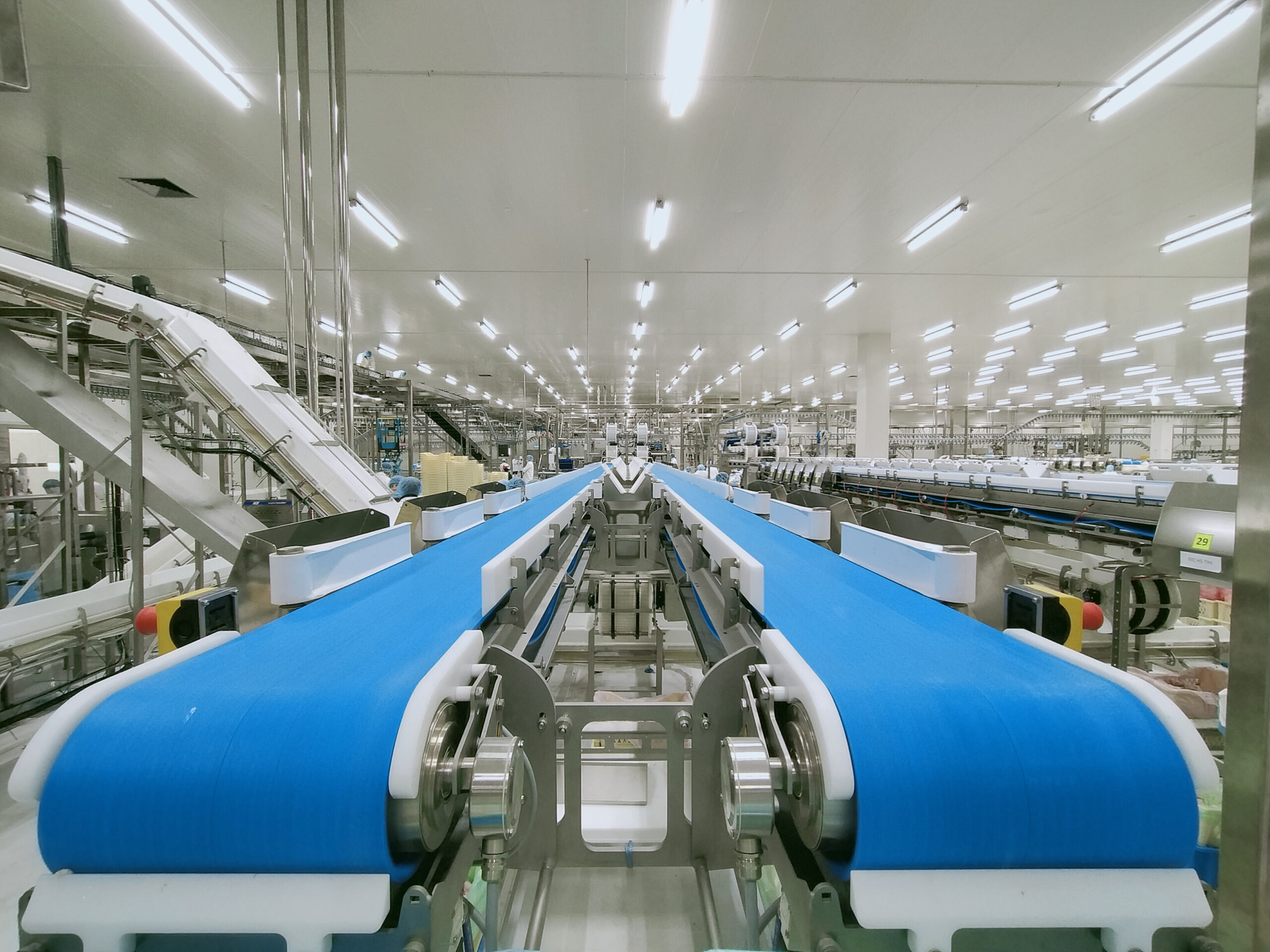
A straight belt conveyor is one of the most versatile conveyor systems available today.
It can transport cartons, plastic containers, food products, components, packaged goods and many other materials.
Whether installed between two production stations or connecting a packaging line with a warehouse, it creates a continuous product flow while reducing manual handling.
Roller conveyor
https://konsort.com.ua/catalog/rolykovyj-konveyer/
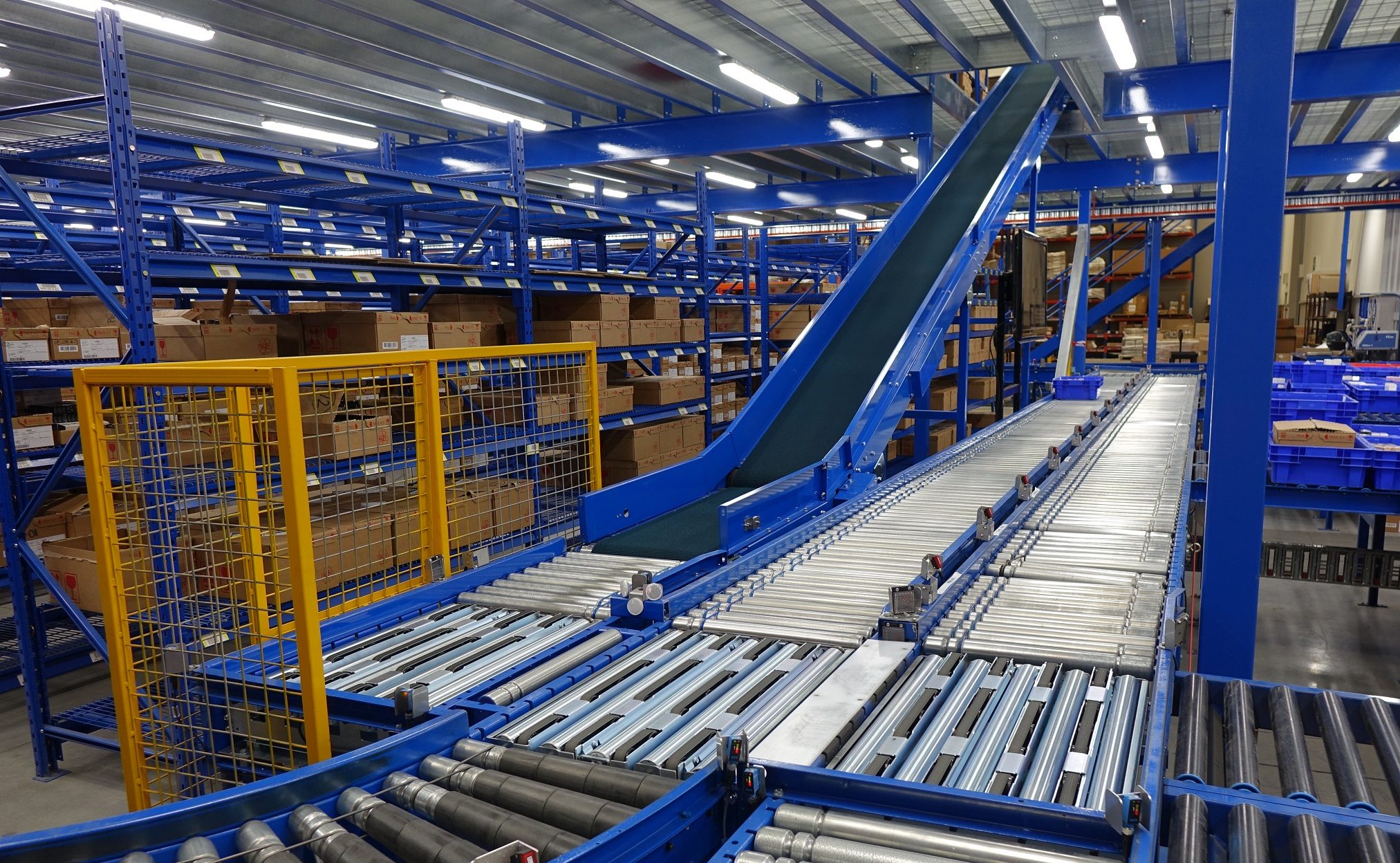
For products with a flat and stable base, a roller conveyor is often the simplest and most cost-effective solution.
Typical applications include:
- cardboard boxes;
- plastic totes;
- crates;
- containers;
- packaged products.
Roller conveyors are widely used in warehouses, order picking areas, packing stations and distribution centres.
Inclined conveyor
https://konsort.com.ua/catalog/pohylyj-konveyer/
Whenever products need to move between different levels, an inclined conveyor provides a continuous alternative to forklifts or manual lifting.
They are commonly installed to feed packaging equipment, mezzanine floors or elevated processing lines.
L-shaped conveyor
https://konsort.com.ua/catalog/l-podibnyj-strichkovo-lanczyugovyj-konveyer/
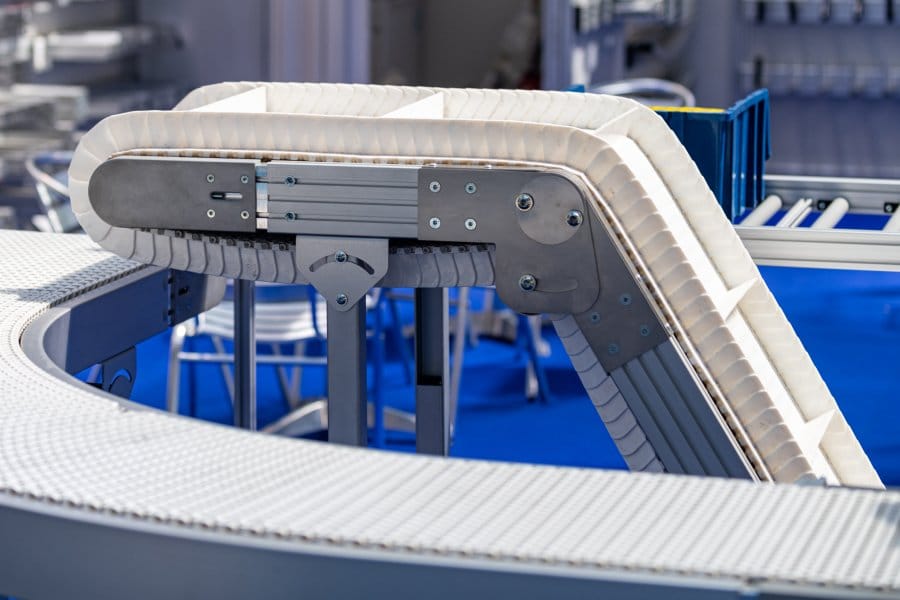
An L-shaped conveyor combines horizontal and inclined transportation into one compact system.
It is frequently used in food processing, agricultural applications and packaging operations where products need to be transferred upward without interrupting production.
Curved conveyor
https://konsort.com.ua/catalog/povorotnyj-konveyer/
Factory layouts are rarely built in a straight line.
Columns, walls and existing machinery often require products to change direction.
A curved conveyor allows production flow to continue smoothly while making the best use of available floor space.
Inspection conveyors
Belt inspection table
https://konsort.com.ua/catalog/inspekczijnyj-stil/
Roller inspection table
https://konsort.com.ua/catalog/rolykovyj-inspekczijnyj-stil/
Automation does not eliminate the need for people.
Quality inspection still relies on experienced operators, but conveyors ensure products arrive at a constant speed and in the correct position.
This allows staff to focus on inspection instead of transporting products manually.
Bar conveyor
https://konsort.com.ua/catalog/prutkovyj-konveyer/
Bar conveyors are particularly popular in agricultural processing.
Besides transporting potatoes, carrots, onions and other root vegetables, they also separate soil and loose debris during transportation, combining two operations into one machine.
Telescopic conveyor
https://konsort.com.ua/catalog/rozkladnyj-konvejery-teleskopichnyj/
Truck loading and unloading remains one of the most physically demanding warehouse operations.
A telescopic conveyor extends directly into the trailer, reducing walking distances and allowing products to be loaded or unloaded much faster.
These systems are widely used in logistics hubs, parcel distribution centres, e-commerce warehouses and shipping departments.
Flexible expandable roller conveyor
https://konsort.com.ua/catalog/rolgang-pantograf/
Not every production facility needs a permanent conveyor installation.
An expandable roller conveyor can be extended, folded and relocated within minutes, making it ideal for seasonal operations, temporary workstations and flexible warehouse layouts.
Vertical conveyor
https://konsort.com.ua/catalog/vertykalnyj-konveyer/
Limited floor space does not always mean production capacity has reached its limit.
A vertical conveyor makes use of unused building height by automatically transferring products between floors, mezzanines or different production levels.
Compared with long inclined conveyors, vertical systems require significantly less floor space while maintaining continuous material flow.
Industries that benefit from conveyor automation
Simple conveyor systems are used across a wide range of industries, including:
- warehouse logistics;
- food manufacturing;
- agriculture;
- fruit and vegetable processing;
- berry production;
- nut processing;
- animal feed production;
- woodworking;
- metalworking;
- pharmaceuticals;
- packaging;
- publishing and printing;
- electronics manufacturing;
- e-commerce fulfilment;
- defence manufacturing.
Whether it is a family-owned business or a large industrial plant, reducing unnecessary product handling almost always leads to higher efficiency.
Choosing the right conveyor
A simple guideline is often enough:
- Boxes and plastic containers → Roller conveyor
- Food products, bags or irregular items → Belt conveyor
- Moving products between levels → Inclined or vertical conveyor
- Changing product direction → Curved conveyor
- Loading trucks → Telescopic conveyor
- Flexible warehouse layouts → Expandable roller conveyor
- Visual quality inspection → Inspection conveyor
- Root vegetables → Bar conveyor
A practical investment with long-term benefits
For many companies, the first step towards automation is not a robot or an automated warehouse.
It is a conveyor.
By reducing unnecessary movement, improving material flow and supporting continuous production, even a simple conveyor system can deliver measurable improvements in efficiency.
Because these systems are modular, they can later be integrated with barcode scanners, weighing systems, machine vision, sorting equipment, robots and warehouse management software as production grows.
Conclusion
Improving internal logistics is often the fastest and most cost-effective way to increase productivity.
A properly designed conveyor system reduces manual handling, creates a smoother production flow and allows employees to focus on tasks that generate real value.
For more than 20 years, KONSORT has been designing and manufacturing conveyor systems for manufacturing plants, warehouses, logistics centres and agricultural businesses across Ukraine and Europe.
If you are planning to automate your internal material handling, our engineering team can help you select the most suitable solution for your products, production capacity and facility layout.