An international agricultural company faced the challenge of organizing the unloading of trucks carrying cleaned seeds without changing the facility’s existing infrastructure. Previously, the production process had been designed primarily for receiving corn cobs. A different technological solution was required to handle cleaned seeds.
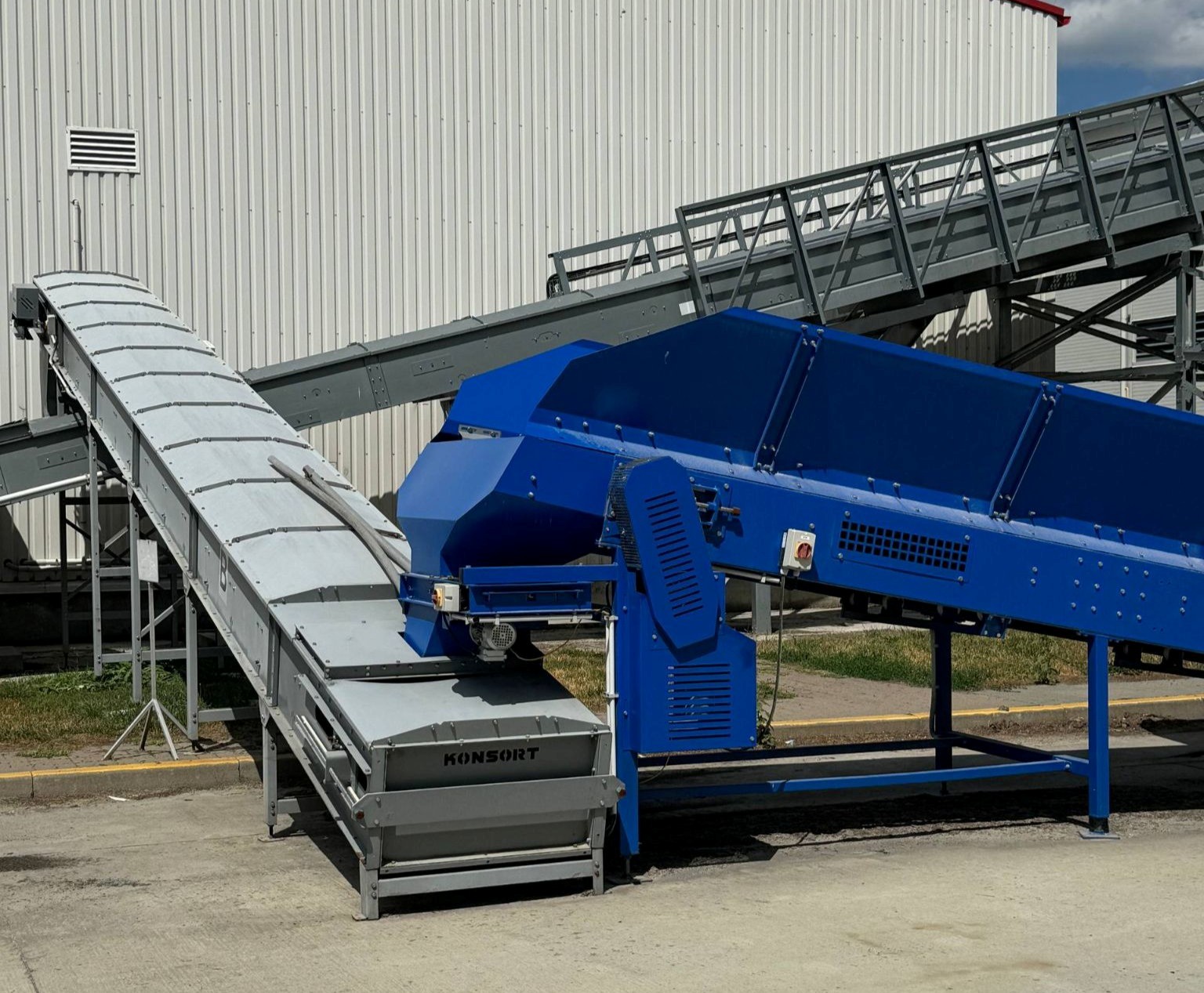
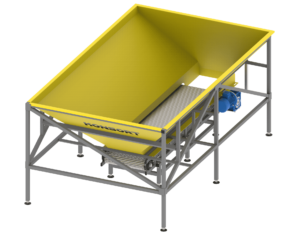
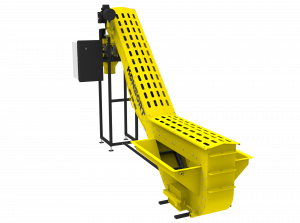
KONSORT engineers developed a system featuring a mobile receiving hopper with a capacity of up to 20 m³ and an integrated conveyor. It enabled seeds to be fed directly into the processing line, bypassing unnecessary production operations.
Project in Numbers
| Indicator |
Value |
| Industry |
Agro-industrial sector, seed production |
| Customer |
Corteva Agriscience |
| Task |
Automation of cleaned seed unloading |
| Equipment |
Mobile receiving hopper with a conveyor system |
| Hopper capacity |
Up to 20 m³ |
| Unloading time |
Approximately 20 minutes |
| Configuration |
Two mirror-image lines |
| Manufacturing lead time |
2–3 weeks |
| Installation time |
10 days |
| Start of operation |
2022 |
| Ongoing cooperation |
Servicing more than 200 conveyors |
About the Customer: An International Seed Production Company
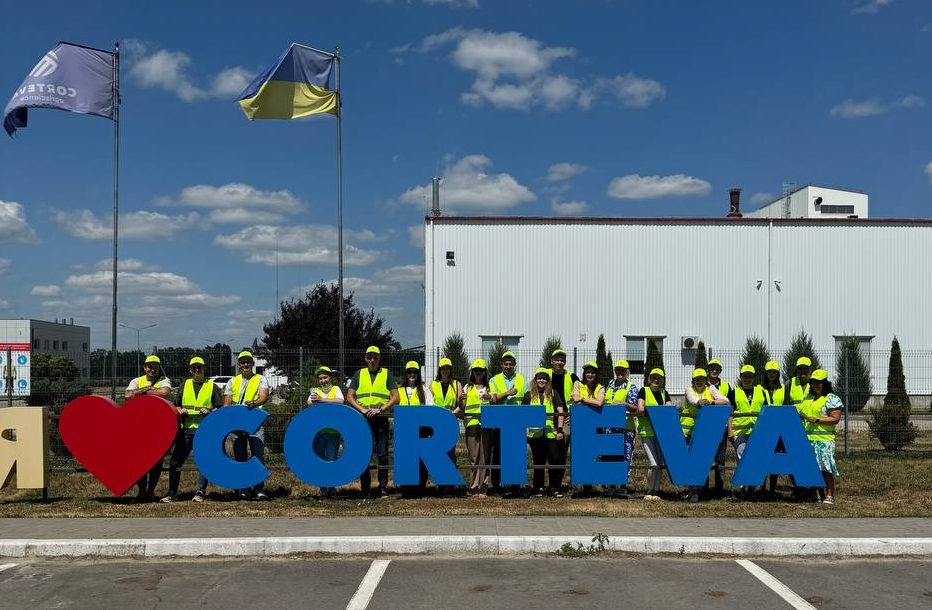
KONSORT was approached by an international agricultural company specializing in seed production and operating in the global market. The facility has well-developed production infrastructure, equipped processing lines, and high requirements for the reliability and safety of production processes.
One of the facility’s technological stages involves receiving raw materials from trucks and subsequently transporting them for processing. This was the stage that required modernization.
The Challenge: The Existing Unloading System Was Not Suitable for the New Raw Material Format
Previously, the facility unloaded mainly corn cobs. However, the production process changed, creating a need to receive cleaned seeds as well.
The existing process required raw materials to undergo operations that were unnecessary for seeds that had already been cleaned. This complicated logistics and increased the duration of the production cycle.
The customer needed a system that would:
- Unload trucks carrying cleaned seeds.
- Feed seeds directly to the next required processing stage — drying.
- Reduce the number of unnecessary operations in the production process.
- Preserve the facility’s existing infrastructure.
- Allow the equipment to be relocated if the production layout changed.
The main limitation was the design of the production site. Engineering utilities, including pipelines and cable networks, ran beneath the concrete floor. Damaging them during construction work could result in additional costs and disrupt the facility’s operations.
Therefore, a standard stationary solution did not meet all the customer’s requirements.
Technical Requirements: Automating Unloading Without Reconstructing the Site
KONSORT engineers were tasked with developing a seed receiving and conveying system that could be integrated with the facility’s existing processing equipment.
The key project requirements were:
- Enable seeds to be received directly from a truck.
- Mechanize product feeding to the existing production line.
- Avoid removing the concrete surface or interfering with underground utilities.
- Provide for the relocation of the receiving equipment.
- Accommodate the mirror-image configuration of the two production lines.
- Ensure coordinated conveyor operation to minimize seed spillage.
The solution needed not only to replace manual operations with mechanized processes but also to fit into the facility’s production workflow without major reconstruction.
Site Inspection and Analysis of Possible Solutions
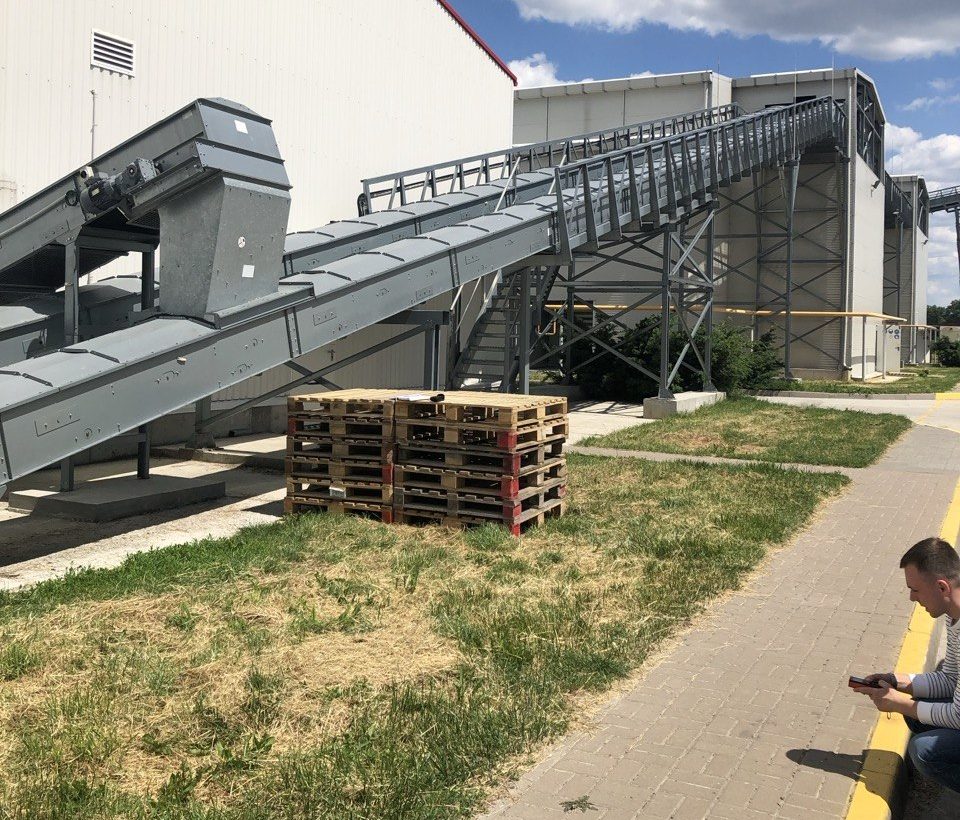
The KONSORT team began the project by visiting the customer’s facility. During the site inspection, the engineers measured the installation area, analyzed the layout of the existing production lines, assessed truck access conditions, and evaluated the possibilities for integrating the new equipment.
Based on the findings, the customer was offered two fundamentally different options.
Option 1. Stationary Receiving Pit with a Conveyor
The first option involved constructing a recessed receiving pit into which seeds would be unloaded directly from a truck. A conveyor would then transport the product to the existing line.
However, implementing this solution would require breaking through the concrete surface of the production site. This would create a risk of damaging underground utilities, require additional construction work, and limit the possibility of relocating the system in the future.
Option 2. Mobile Receiving Hopper with a Conveyor
The alternative was an above-ground hopper equipped with a conveying system for feeding the seeds.
The truck unloads the product into the receiving hopper, from which the conveyor feeds it to the next processing stage. This solution avoids interfering with the concrete foundation and allows the equipment to be relocated when necessary.
Following technical analysis and consultation with the customer, the second option was selected.
Project Manager’s Comment
Artem Fedii, Head of Customer Relations at KONSORT:
“When we received the request, we immediately considered several options, but it became clear that our initial approach, such as constructing a silo pit, was unsuitable. It could cause problems with the utilities. We needed to propose a solution that would be quick and efficient without requiring fundamental changes to the facility’s structure.”
KONSORT’s Engineering Solution: A Mobile Hopper with a Capacity of up to 20 m³
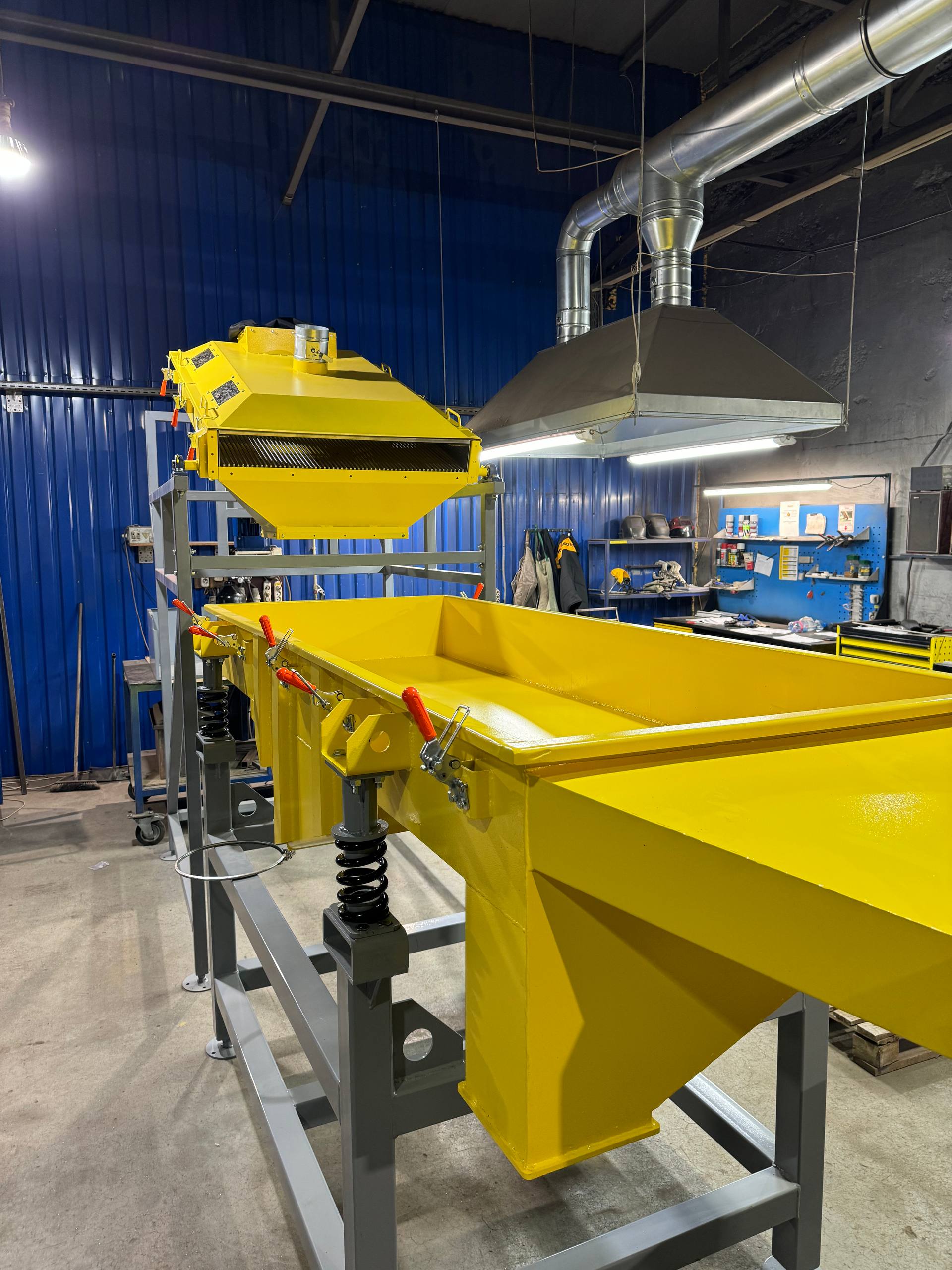
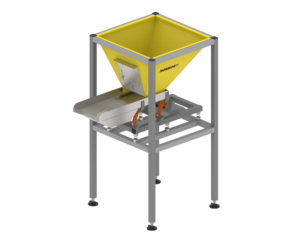
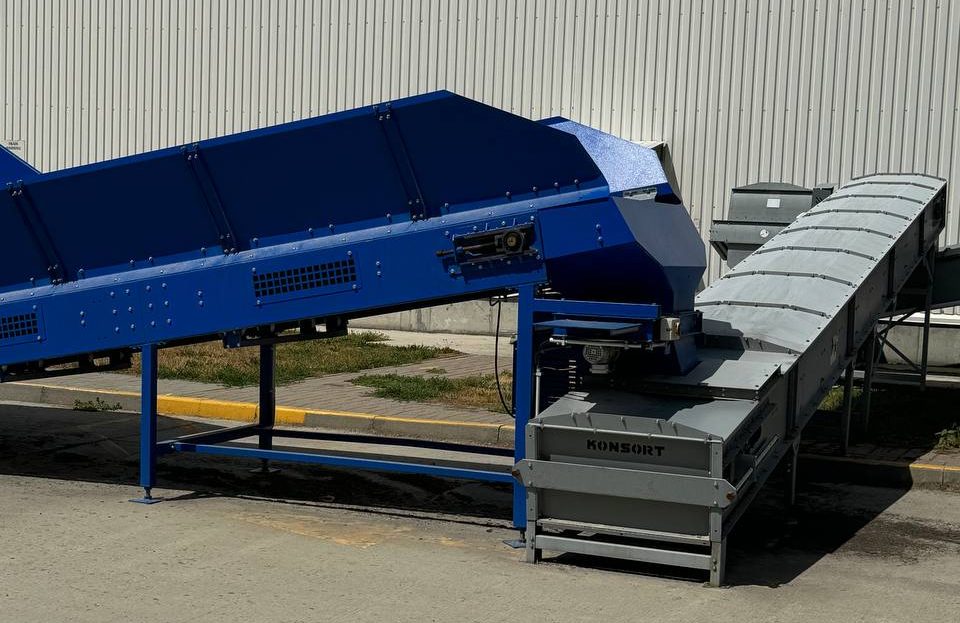
The KONSORT team designed and manufactured a mobile receiving hopper for unloading seeds from trucks. The solution is based on a receiving hopper with a capacity of up to 20 m³ and an integrated conveyor for mechanized product handling.
The structure is mounted on supports and can be moved using a forklift. This allows it to be adapted to potential changes in production logistics.
Unlike a stationary receiving pit, the mobile hopper does not require excavation beneath the concrete floor.
How the Seed Unloading System Works
The process is organized as follows:
Truck arrival. The truck positions itself next to the receiving hopper.
Seed unloading. The product is discharged directly from the truck body into the hopper.
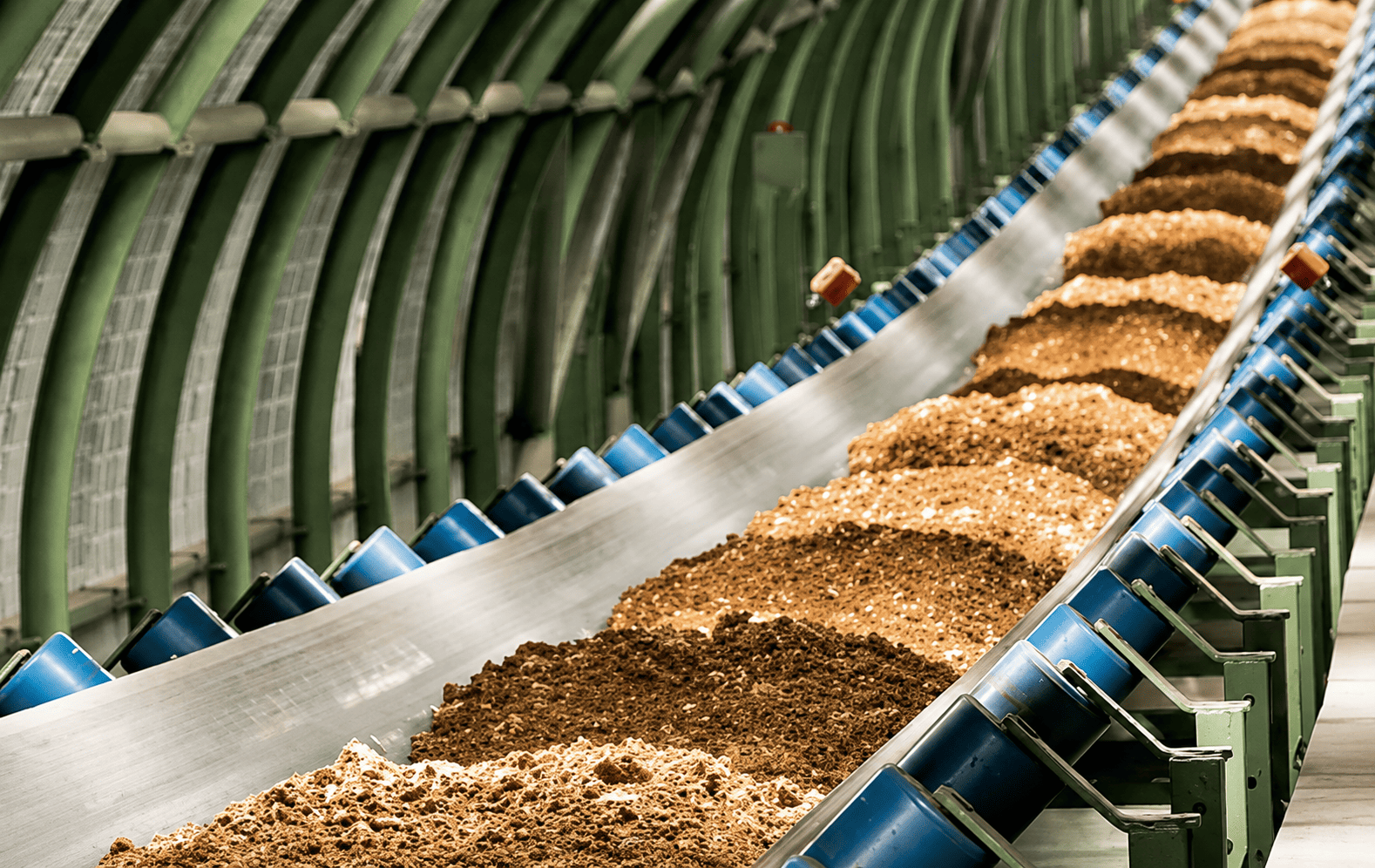
Mechanized feeding. The integrated conveyor transports the seeds out of the hopper.
Transfer to the processing line. The raw material proceeds to the next required processing stage, including drying.
This arrangement established a direct route for cleaned seeds, eliminating the processing operations required for corn cobs.
The planned unloading time for a truck using the proposed system is approximately 20 minutes.
Project Features: Two Mirror-Image Lines and Conveyor Synchronization
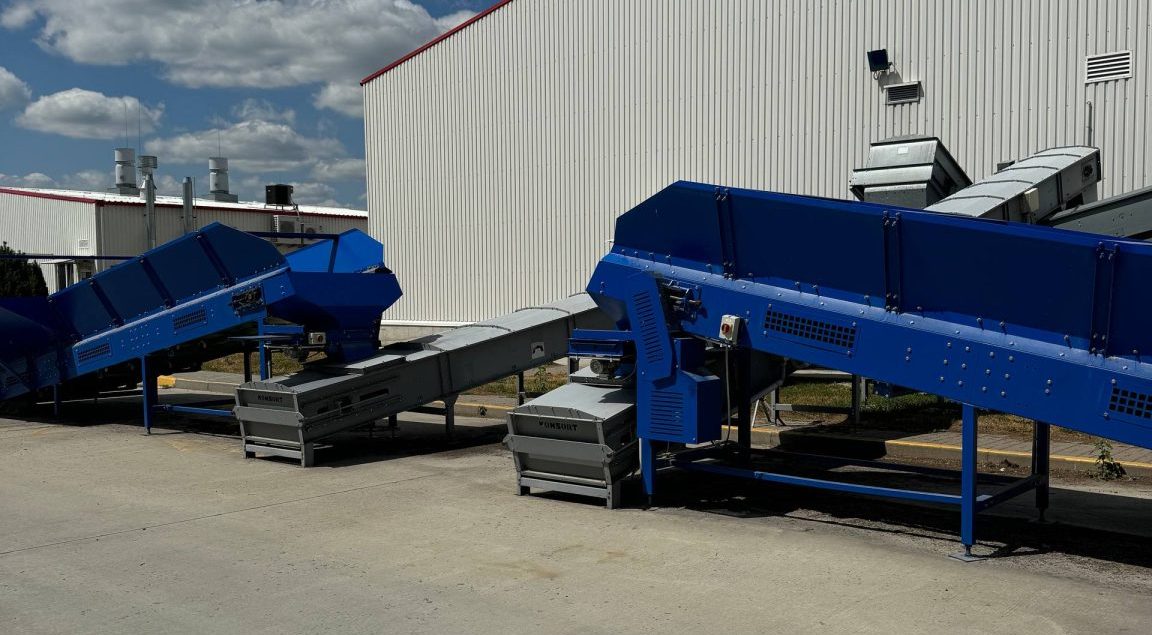
A key feature of this project was adapting the equipment to two existing production lines arranged as mirror images of each other. Loading takes place from the left-hand side on one line and from the right-hand side on the other.
This requirement was considered at the 3D design stage. The engineers prepared digital models and agreed on the equipment layout with the customer to ensure integration with the existing systems.
Another important technical consideration was the speed at which seeds moved between conveyors. Initial testing revealed that running adjacent conveyors at the same speed caused minor product spillage at the transfer point.
KONSORT specialists promptly analyzed the cause and increased the speed of the second conveyor. Repeat testing confirmed that the issue had been resolved.
This stage demonstrated the importance of not only designing individual machines correctly but also configuring them to work together as an integrated processing system.
Equipment Technical Specifications
| Parameter |
Specification |
| Equipment type |
Mobile receiving hopper with a conveyor system |
| Purpose |
Unloading and conveying cleaned seeds |
| Hopper volume |
Up to 20 m³ |
| Design |
Mobile above-ground structure on supports |
| Relocation |
Using a forklift |
| Integration |
Into the customer’s existing processing lines |
| Configuration |
Two mirror-image lines |
| Estimated unloading time |
20 minutes |
| Design |
Custom 3D modelling |
Project Implementation: From Initial Consultation to Commissioning
KONSORT managed the project from start to finish, including site inspection, manufacturing, delivery, installation, and equipment commissioning.
Stage 1. Technical Audit of the Facility
Specialists visited the production site, took the necessary measurements, and collected the initial data. Following the inspection, several possible technical and commercial proposals were prepared.
Stage 2. Selecting and Approving the Concept
The two options — a stationary receiving pit and a mobile hopper — were compared with the customer. The above-ground mobile design was selected because it allowed the existing production infrastructure to be preserved.
Stage 3. International Supplier Approval
As the customer is part of an international corporate structure, KONSORT underwent a multilevel supplier registration process. Checks and approvals involved the company’s international divisions, including those in America, Africa, Europe, and Ukraine.
Once the process was completed, the contract was signed and project implementation began.
Stage 4. 3D Design
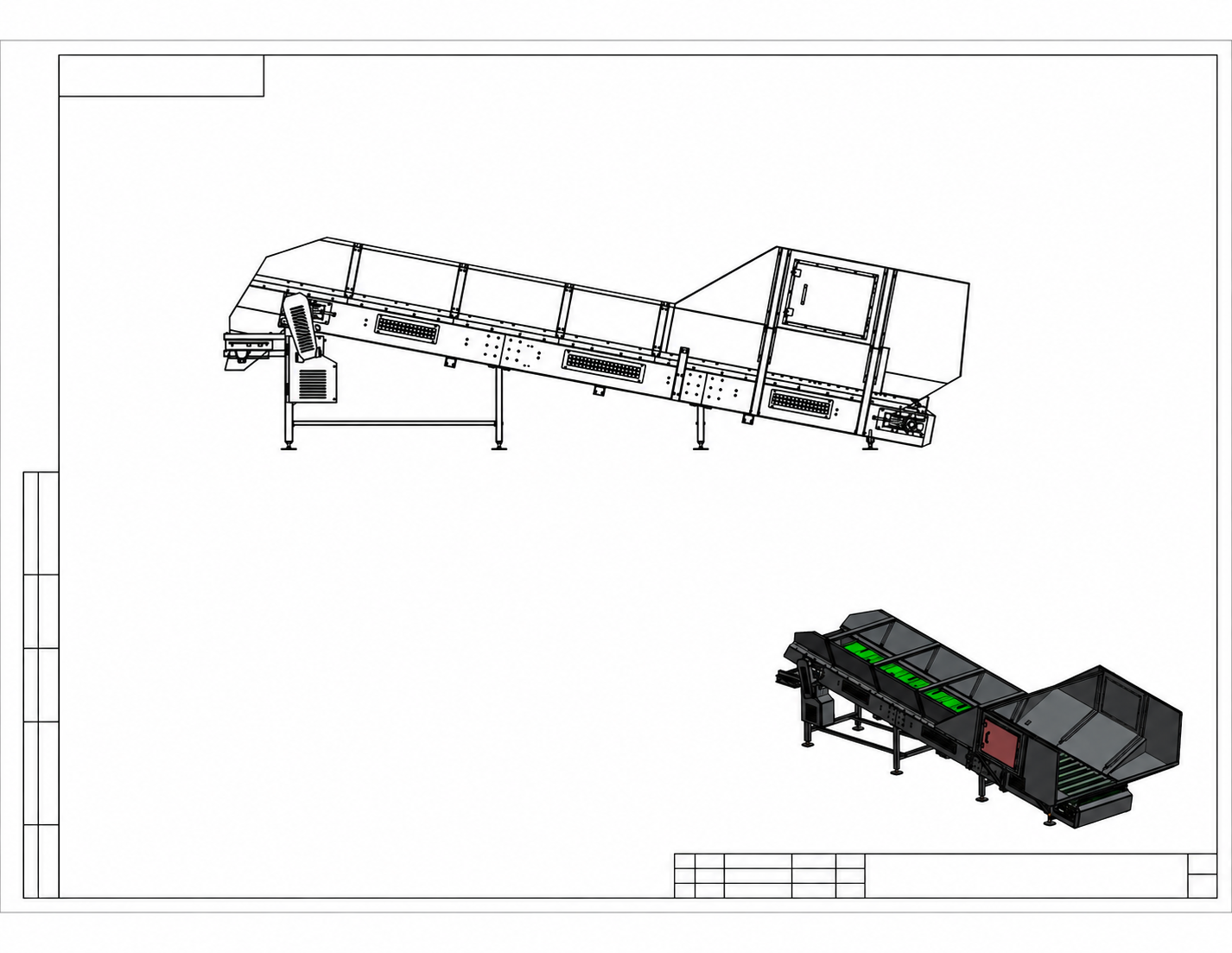
KONSORT engineers developed three-dimensional equipment models based on the actual site measurements. Particular attention was paid to the mirror-image arrangement of the two processing lines and the conveyor integration points.
The completed models were submitted to the customer for approval.
Stage 5. Equipment Manufacturing
Manufacturing began after the design was approved. The work included sourcing the required components, fabricating metal structures, welding, painting, and preparing the equipment for shipment.
The manufacturing lead time was approximately 2–3 weeks.
Stage 6. Delivery and Installation
The completed equipment was delivered to the customer’s facility.
Installation was carried out by KONSORT specialists. All on-site work was completed within 10 days.
Stage 7. Testing and Commissioning
Following installation, the system was tested while unloading the first trucks carrying seeds. Actual operating conditions revealed the need to adjust conveyor speeds.
After further adjustment and repeat testing, product spillage at the transfer point was eliminated, and the system was handed over to the customer.
Automation Results: What the Customer Gained
The main outcome was that the facility gained the ability to handle two raw material formats: corn cobs and cleaned seeds.
A separate feeding route was established for cleaned seeds, eliminating unnecessary processing stages.
Comparison of the Production Process
| Indicator |
Before Implementation |
After Implementation |
| Receiving format |
Primarily corn cobs |
Cleaned seeds also accepted |
| Route for cleaned seeds |
Through unnecessary processing stages |
Directly to the next required operation |
| Receiving system |
Existing process configuration |
Mobile hopper with a conveyor |
| Need to reconstruct the concrete foundation for the new solution |
Risk associated with installing a stationary pit |
No reconstruction required |
| Ability to relocate the new receiving system |
A stationary design would restrict relocation |
The hopper can be moved |
Practical Benefits of Implementation
Shorter processing route. Cleaned seeds are fed to drying without undergoing operations intended for corn cobs.
Flexible production logistics. The mobile hopper can be moved within the facility or integrated into another area following appropriate technical adaptation.
Preserved infrastructure. No excavation or intervention in the concrete floor containing underground utilities was required.
Mechanized unloading. A conveyor system feeds seeds from the receiving hopper to the processing line.
Stable operation after commissioning. Testing identified and resolved product spillage at the transfer point between conveyors.
Economic Benefits
The main economic advantage of the implemented solution lies in eliminating additional construction work and reducing unnecessary processing operations.
Using a mobile receiving hopper made it possible to avoid constructing a recessed receiving pit. This eliminated the associated costs of removing and restoring the concrete surface and reduced the risk of damaging utility networks.
The processing route for cleaned seeds was also changed. The product can now be fed directly to drying, reducing the number of production operations involved.
Long-Term Operating Results
KONSORT equipment has been operating at the customer’s facility since 2022.
The project did not mark the end of the companies’ cooperation. On the contrary, successful installation and system adjustment provided a basis for expanding the partnership.
During installation, the customer’s representatives recognized the expertise of KONSORT’s technical specialists and invited the company to take responsibility for servicing other conveyor systems at the facility.
Servicing More Than 200 Conveyors
Today, KONSORT’s cooperation with the facility extends far beyond a single completed project.
The company’s service team regularly works at the customer’s production site, providing maintenance for more than 200 conveyors.
Specialists visit the facility regularly from Monday to Friday and service both KONSORT conveyors and equipment that had already been in operation at the facility.
Thus, cooperation that began with the task of automating seed unloading has developed into a long-term service partnership.
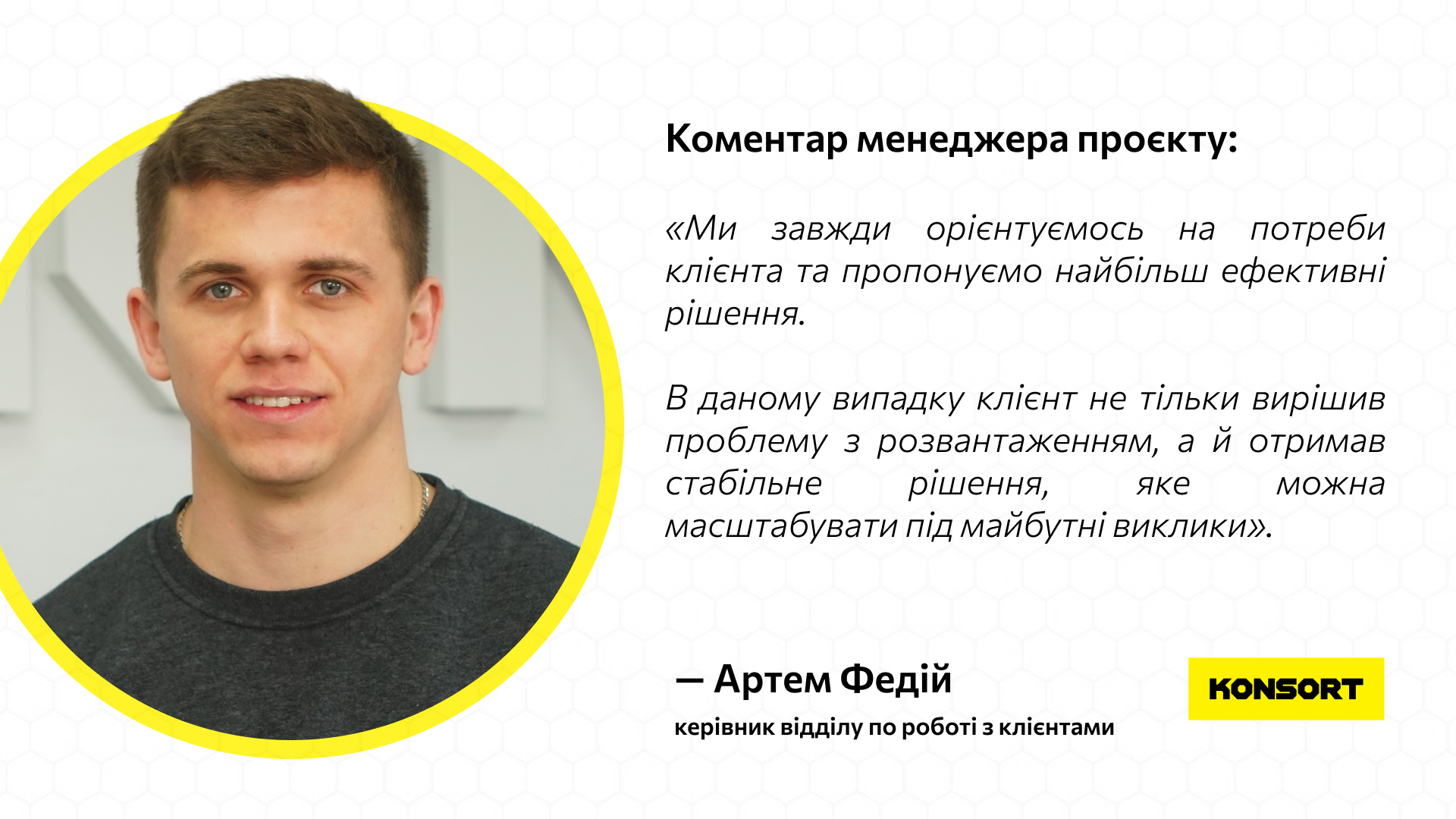
Project Manager’s Comment
Artem Fedii, Head of Projects at KONSORT:
“We always focus on our customers’ needs and offer the most effective solutions. In this case, the customer not only resolved the unloading issue but also gained a reliable solution that can be scaled to meet future challenges.”
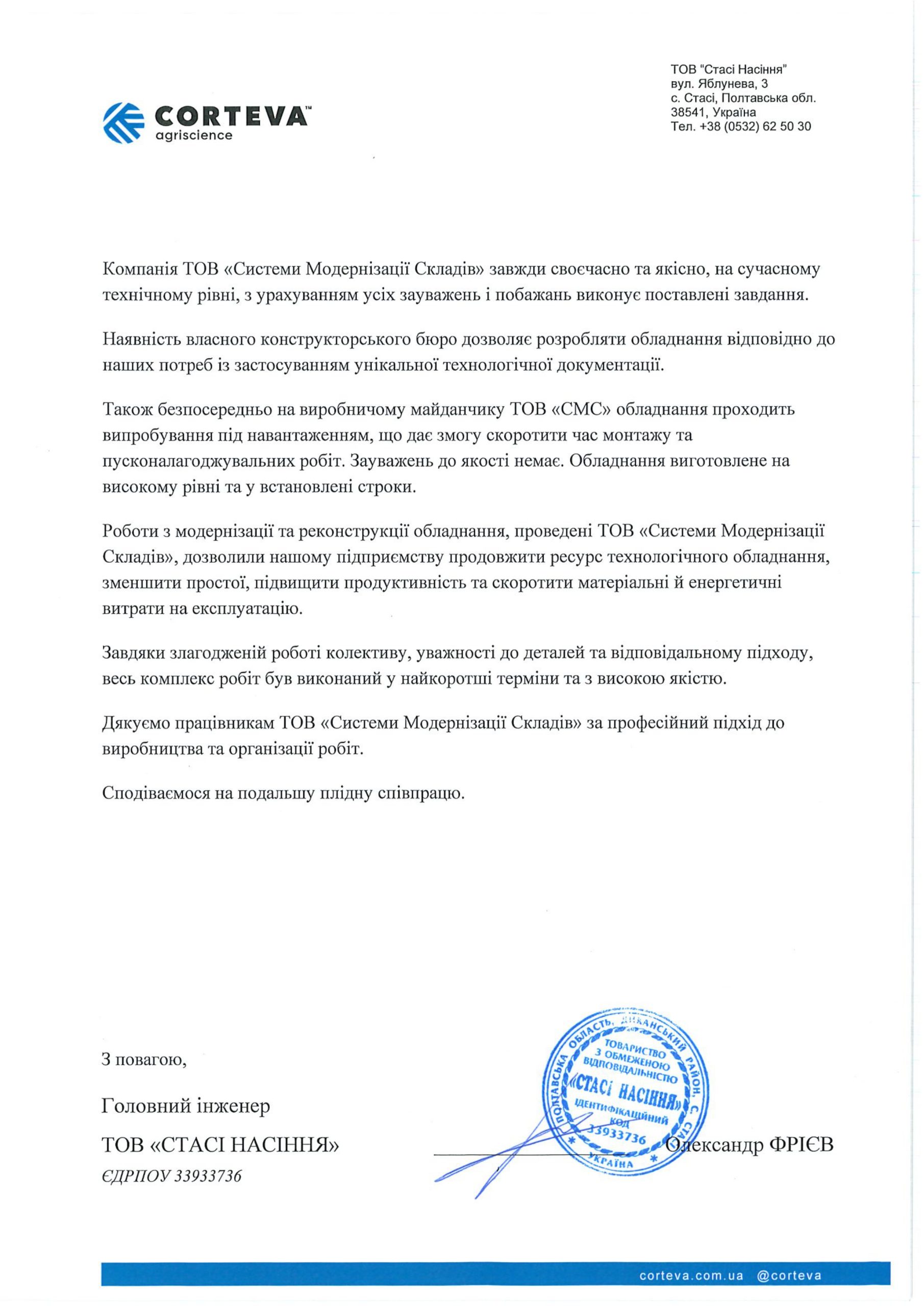
Customer Feedback
Which Facilities Can Benefit from a Mobile Hopper with a Conveyor?
These receiving systems can be useful for facilities handling grain, seeds, and other bulk agricultural products.
In particular, the equipment can be used:
- At seed processing plants — to receive raw materials and feed them to processing lines.
- At grain processing facilities — for mechanized grain unloading and conveying.
- At agricultural production facilities — to integrate additional receiving areas.
- At facilities with limited space or complex underground utilities — as an alternative to a stationary receiving pit.
- At facilities with changing process layouts — where the ability to relocate receiving equipment is important.
The design and capacity are selected for each project based on product characteristics, vehicle specifications, process requirements, and operating conditions.
Frequently Asked Questions About Mobile Grain and Seed Hoppers
What is a mobile receiving hopper used for?
A mobile hopper receives bulk products from vehicles, provides temporary storage, and mechanically feeds the product to a processing line. Its main advantage is that the equipment can be relocated without constructing a stationary receiving pit.
How many seeds can the hopper hold?
For this project, KONSORT manufactured a hopper with a capacity of up to 20 m³. The actual mass of product it can hold depends on the bulk density of the specific raw material and the permissible load on the structure.
How long does it take to unload a truck?
For the implemented solution, the estimated unloading time is approximately 20 minutes. The actual duration depends on the quantity of product, the unloading method, and the capacity of the conveying system.
Can the hopper be installed without breaking the concrete surface?
Yes. This was one of the customer’s key requirements. The above-ground mobile hopper made it possible to organize unloading without constructing a recessed receiving pit.
Can a receiving hopper be integrated into an existing line?
Yes. For this project, KONSORT engineers adapted the equipment to existing processing lines arranged as mirror images of each other. Integration requires a preliminary assessment of the site layout, product characteristics, and specifications of adjacent equipment.
How long does it take to manufacture a mobile hopper?
For this project, manufacturing took approximately 2–3 weeks. The actual lead time for a new order is determined after the technical specification and design have been approved.
Does KONSORT provide installation and servicing?
Yes. KONSORT carried out installation, testing, and commissioning as part of this project. Following its completion, the company also began regular maintenance of more than 200 conveyors at the customer’s facility.
Need to Automate Grain or Seed Unloading?
Every agricultural facility has its own requirements: different raw materials, production floor layouts, space and capacity constraints, and equipment integration requirements.
KONSORT develops custom conveyor systems, receiving hoppers, and comprehensive solutions for production process automation.
We analyze the process requirements, select the optimal solution, design and manufacture the equipment, and provide delivery, installation, commissioning, and ongoing service.
Have a similar challenge? Send us the product specifications, required throughput, and photos of your production area. Our engineers will propose an automation solution tailored to your facility.
Get a free consultation and a preliminary quotation for KONSORT equipment.
Phone: +38 (067) 116-50-25