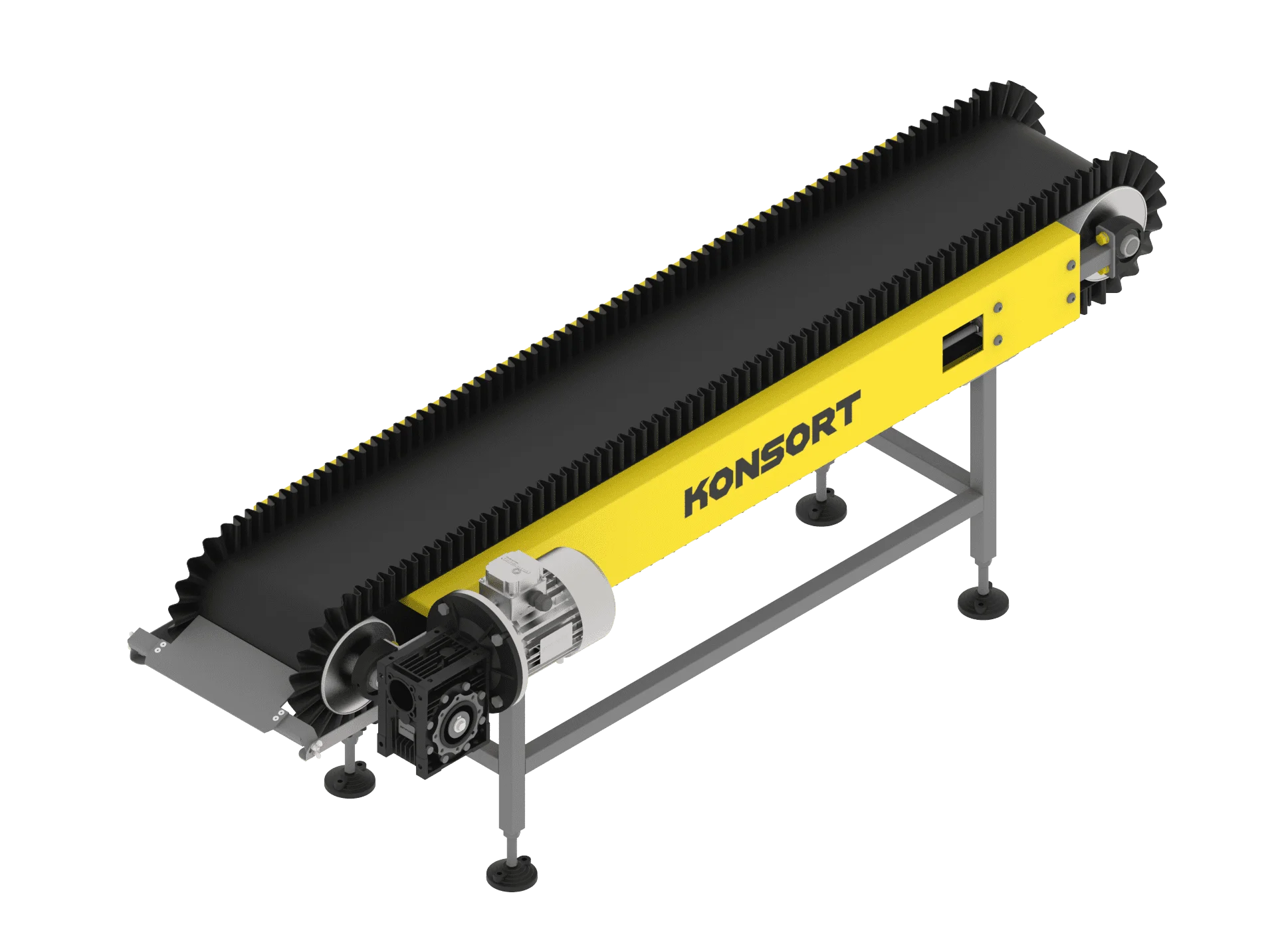
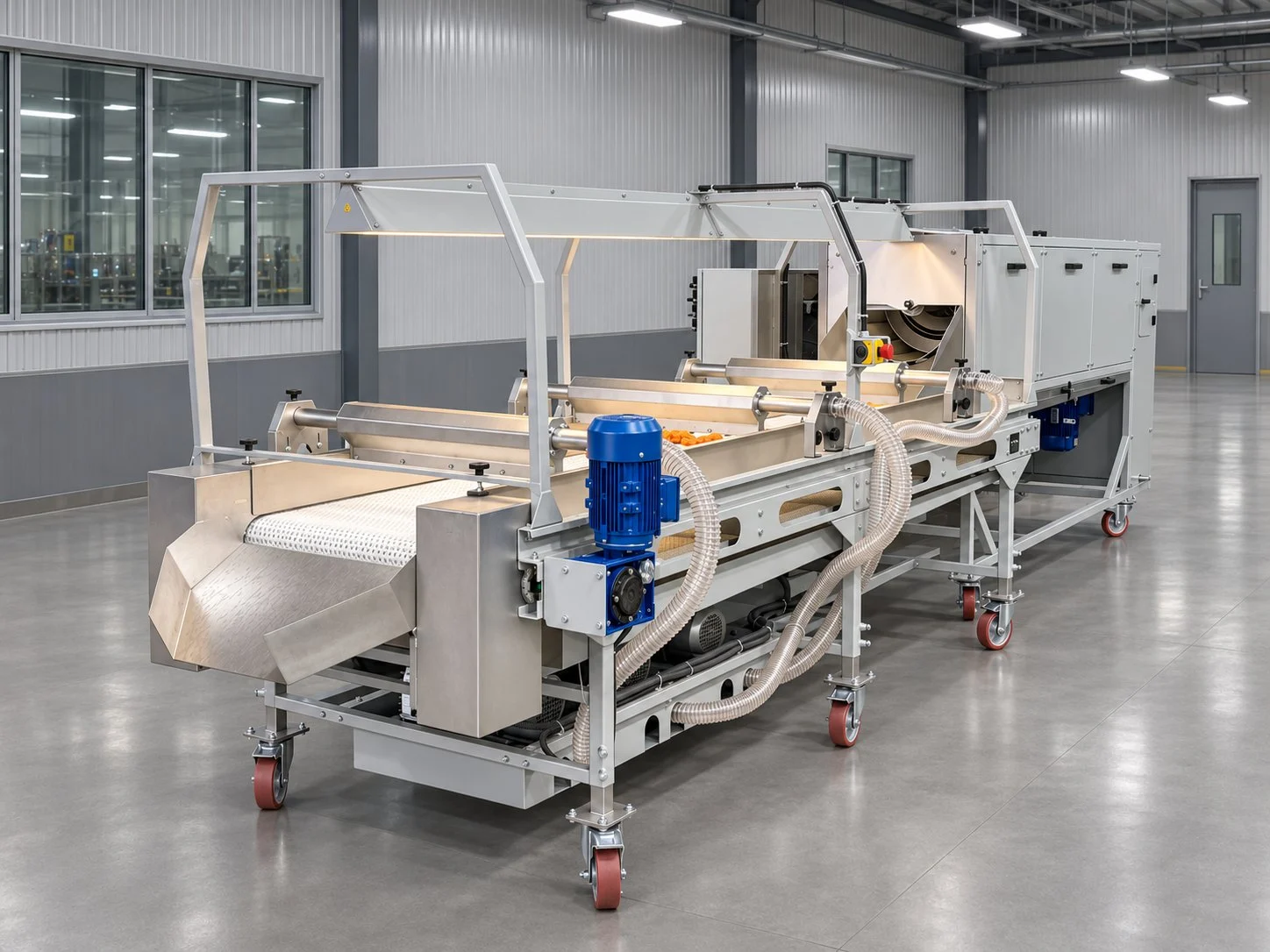
Conveyor line automation means conveyors that start, change speed, count products and stop on a fault without an operator. The result: fewer manual operations, a stable line rhythm, less downtime and reliable data.
Key components
- Drive with a variable frequency drive (VFD) — soft start, adjustable speed, less wear, lower energy use.
- Sensors — product presence and counting, position and speed, weighing, belt misalignment and pull-cord emergency switches.
- PLC — zone start, synchronisation of several conveyors, sorting, accumulation and rejection.
- Operator panel (HMI) and integration with scales, labelling, packing and, if needed, WMS/ERP/SCADA.
Levels of automation
1) start/stop with a VFD; 2) sensor logic and accumulation; 3) PLC-controlled line with sorting and weighing; 4) data exchange with IT systems. Most projects start at levels 1–2 and grow step by step.
Where it pays off fastest
Warehouses and e-commerce, food processing, agriculture (sizing, washing, sorting) and manufacturing. See warehouse equipment, turnkey production lines and our projects.
KONSORT is a Ukrainian conveyor manufacturer with its own factory in Poltava: 20 years on the market and 5000+ completed projects.
FAQ
What does conveyor automation include?
At minimum: a drive with a variable frequency drive (VFD), an emergency stop and product-presence sensors. Next come counters, belt-misalignment sensors, weighing, a PLC and an operator panel.
Can an existing conveyor be automated?
In most cases, yes — a VFD, sensors and a control cabinet can be added if the frame and drive are in good condition.
How much does conveyor line automation cost?
It depends on the number of drives and sensors, the control level and integration with other equipment. KONSORT engineers prepare a free quote for your task.