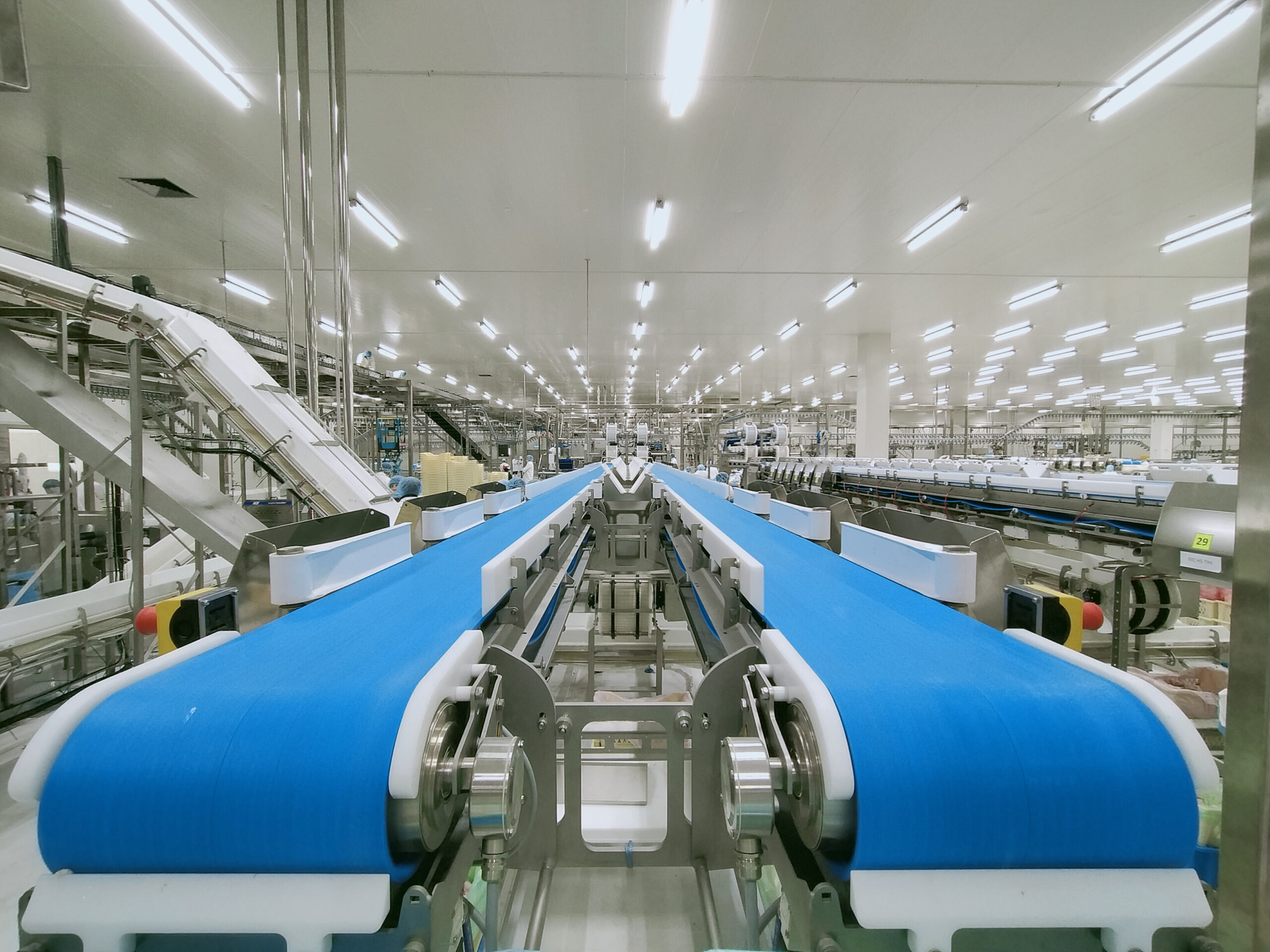

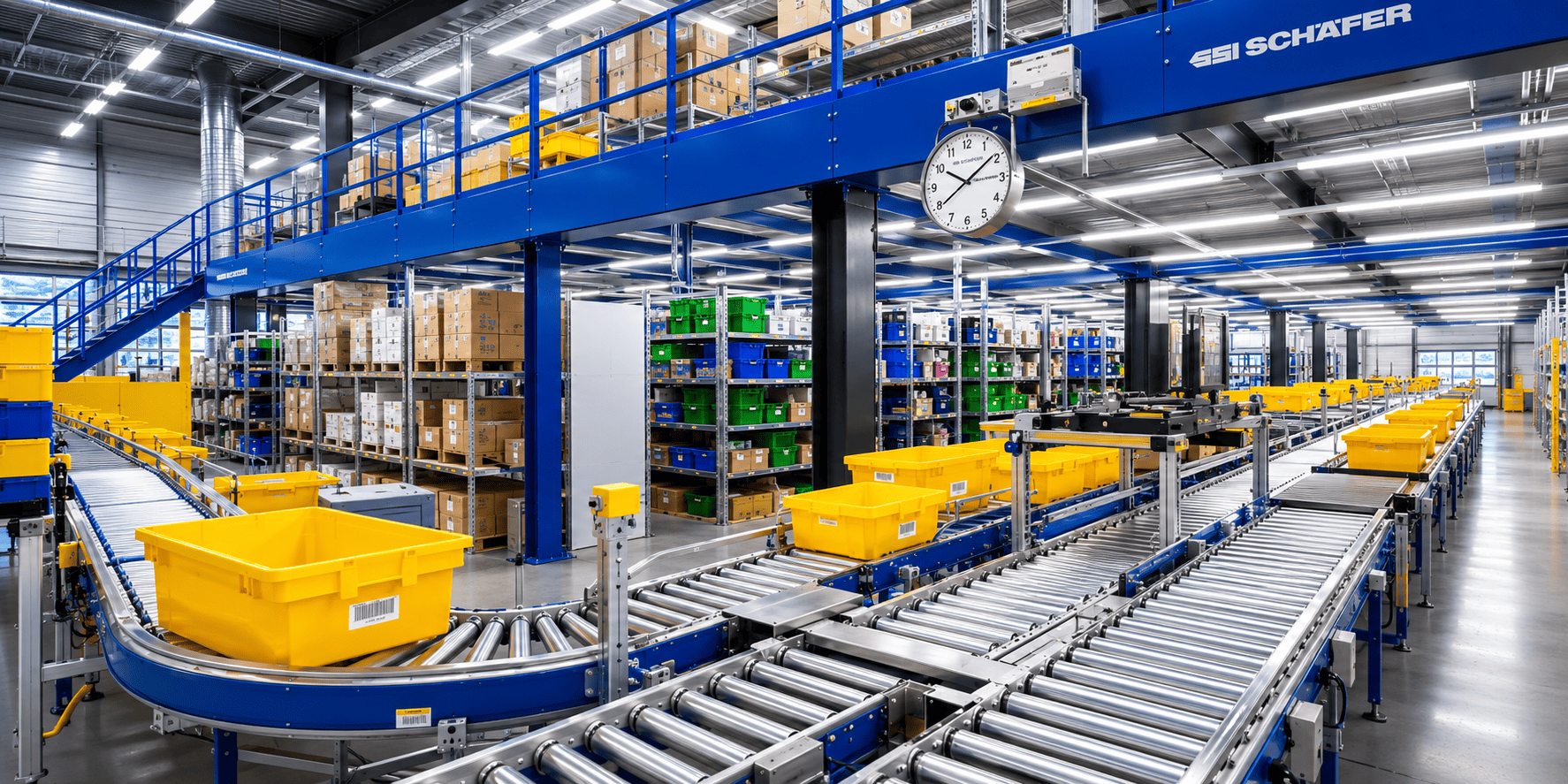
Warehouse Automation: How Conveyor Systems Increase Productivity by 2–5 Times
A modern warehouse is no longer just a storage facility. It is a high-performance logistics hub where speed, accuracy, and continuity directly affect business profitability.
That is why warehouse automation using conveyor systems and sorting solutions has become a key growth driver for FMCG warehouses, logistics operators, and e-commerce fulfillment centers.
Industry benchmarks show that conveyor automation can:
-
increase warehouse throughput by 2–5 times,
-
reduce operating costs by 25–40%,
-
cut picking and sorting errors by up to 90%.
What Is Warehouse Automation?
Warehouse automation is the use of conveyor lines, sorting systems, accumulators, and automated handling equipment to replace or minimize manual product movement between warehouse zones.
Instead of forklifts and manual transport, goods move through a continuous material flow, from receiving to shipping, without unnecessary stops or delays.
Key Problems of Non-Automated Warehouses
Warehouses without conveyor systems typically face:
-
excessive manual labor
-
slow order processing
-
bottlenecks between zones
-
high dependency on human factors
-
difficulties scaling during peak seasons
As volumes grow, these issues lead to lost time, higher costs, and reduced service quality.
How Conveyor Systems Transform Warehouse Operations
1. Continuous Material Flow
Conveyor systems connect all warehouse zones:
-
receiving
-
picking
-
sorting
-
packing
-
shipping
This eliminates downtime and stabilizes operations, especially in high-volume FMCG warehouses.
2. Productivity Increase by 2–5 Times
In practice, automated warehouses achieve:
-
up to 5× higher throughput per hour,
-
order processing time reduced from 30–40 minutes to 5–10 minutes,
-
labor reduction in transport operations by 50–70%.
3. Sorting Systems as the Core of Automation
Sorting systems (LR sorter, shoe sorter, diverters) automatically distribute goods by destination, route, or order.
Typical performance indicators:
-
sorting accuracy: 99.7–99.9%,
-
capacity: 3,000–20,000 items/hour,
-
ROI: 12–24 months.
Why Automation Is Critical for FMCG Warehouses
FMCG warehouses operate with:
-
high turnover rates
-
short storage cycles
-
seasonal demand peaks
Conveyor automation allows companies to scale operations without proportional increases in staff, while maintaining speed and accuracy.
Global Trends in Warehouse Automation
-
modular conveyor systems for easy expansion
-
integration with WMS and ERP systems
-
focus on total cost of ownership (TCO), not just equipment price
-
energy-efficient drives and smart sensors
-
hybrid systems combining conveyors and robotics
KONSORT — Conveyor System Design for Automated Warehouses
KONSORT designs and manufactures:
-
conveyor lines for warehouses
-
sorting systems for FMCG logistics
-
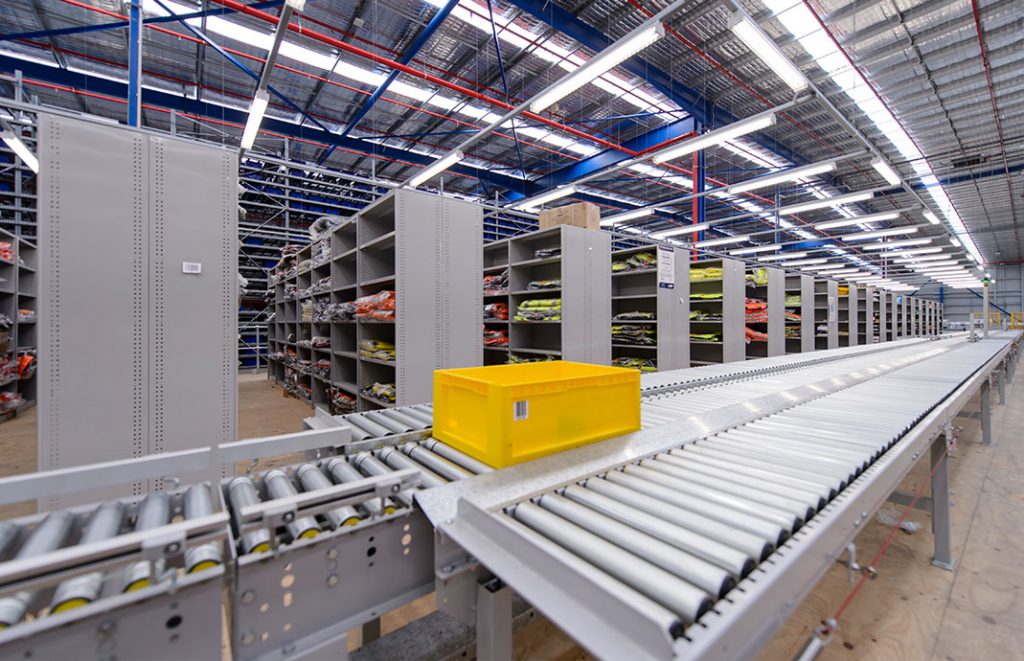
roller conveyors and accumulation zones
-
turnkey warehouse automation solutions
We do not sell equipment — we design scalable warehouse processes.