Walnut processing equipment: receiving, cleaning, drying and grading
Walnuts in Ukraine: harvesting, cleaning, drying, grading and preparation for sale
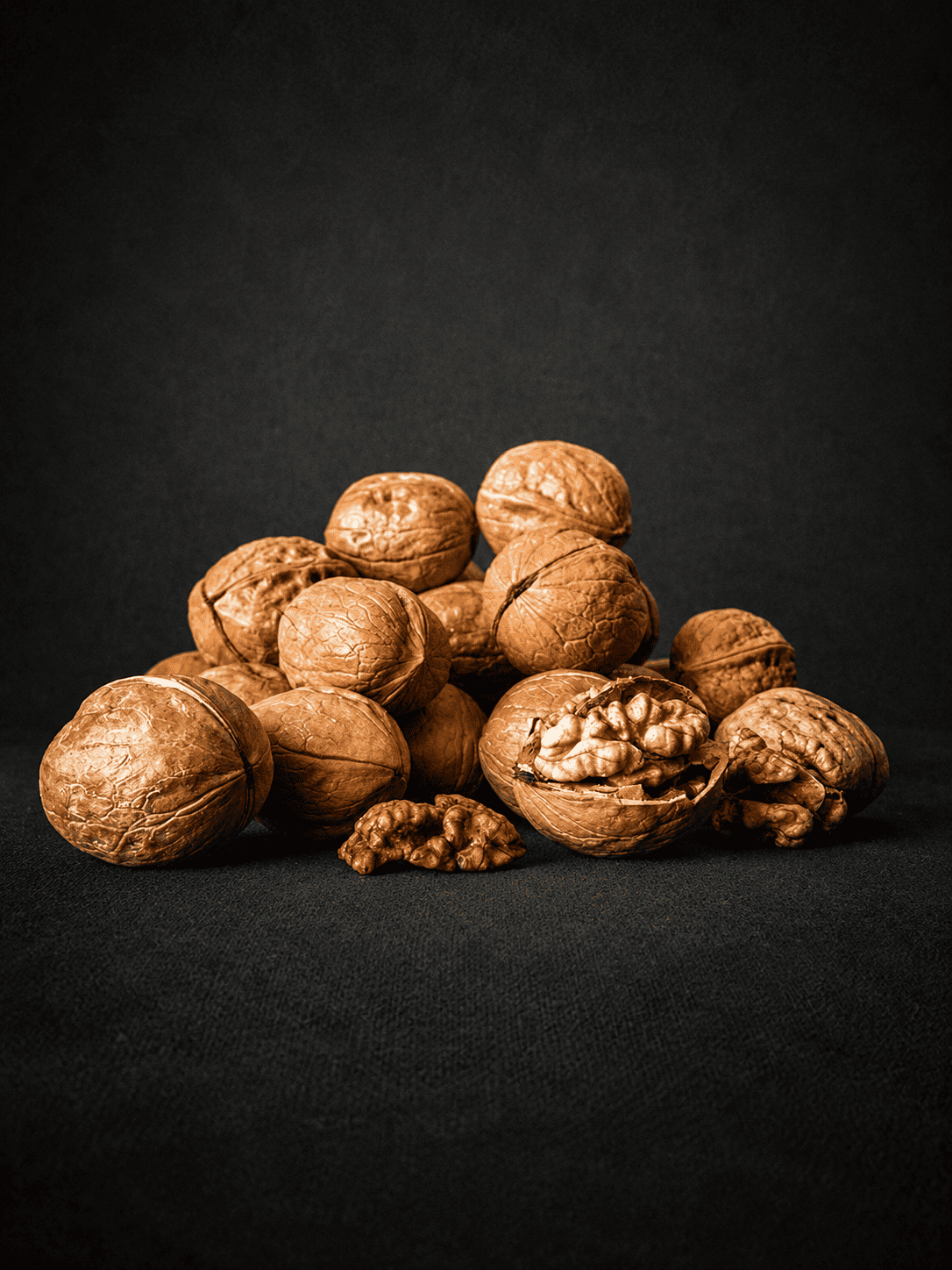
The end of August is the start of the walnut season: the first cracks in the green husk appear as early as the end of the month, while mass harvesting continues until October. Ukraine increases its walnut export volumes every year, but export revenue does not always grow proportionally — the main reason is that the vast majority of walnuts offered by Ukrainian exporters are unsorted. To approach the quality of premium batches supplied by the world’s leading exporters, attention must be paid specifically to processing and sorting, not only to harvesting volumes.
According to industry experts, Ukrainian walnuts lose up to 45% of their potential value precisely because of technological errors during processing. At the same time, 60–70% of Ukrainian walnut exports are still formed from chaotically collected mixed-variety walnuts from private households — while among the world’s industry leaders, cleaning and grading processes are 95% automated, allowing them to supply retailers with uniform batches of consistent size at a higher price.
In this article, we will examine:
- why walnut processing equipment should be selected as a single technological line rather than a set of separate machines;
- which units the line consists of — from harvesting to grading;
- how to calculate the actual capacity for your procurement volume;
- typical mistakes made by procurers;
- how much walnut processing equipment costs in Ukraine.
⸻
Why walnut processing equipment should be selected as a single line
One of the most common mistakes is to buy a dryer separately, a grader separately, and then discover that their capacities are not coordinated with each other.
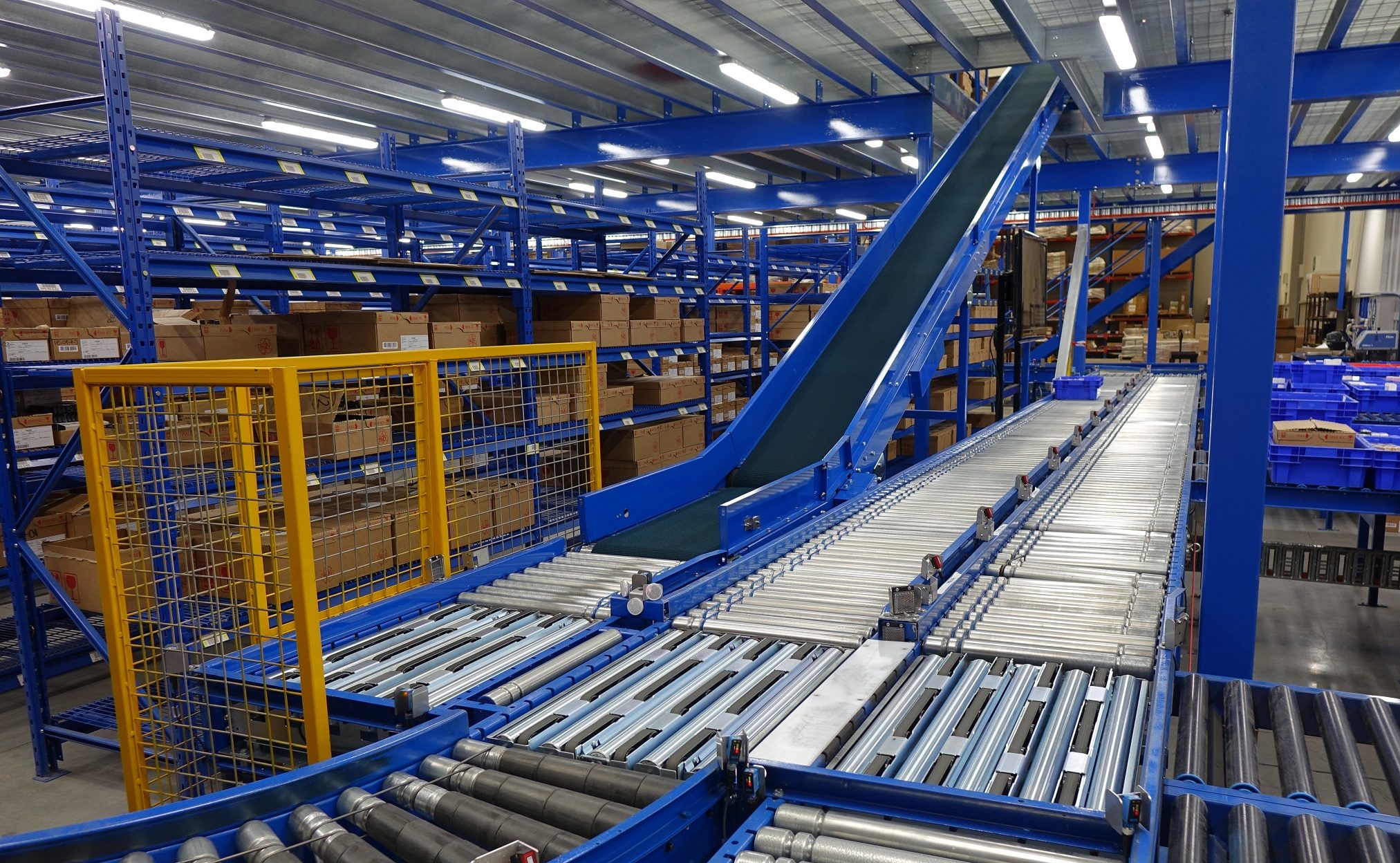
For example: KONSORT rotary grader (https://konsort.com.ua/catalog/kalibrator-rotornyj/ ) is a high-speed machine with a capacity designed for an industrial flow, while the dryer at the facility processes only 1 tonne per day. In this case, the actual throughput of the entire line is determined not by the grader but by the slowest section — the dryer. The money invested in a high-speed grader partially “stands idle” while the product waits for its turn to be dried.
Therefore, when selecting equipment, it is important to take into account not only the rated capacity of each individual machine, but also:
- coordination of capacity between all units of the line;
- the number of product transfer points (reloadings);
- the sequence of operations for a specific sales format (in-shell or kernels);
- placement of equipment inside the procurement facility.
⸻
What a walnut processing line looks like
The configuration depends on the procurement volume and sales format, but a typical technological scheme looks like this:
harvesting from the tree → removal of the green husk → washing → drying → in-shell grading → (if required) cracking → aspiration and kernel sorting into fractions → inspection → packaging
Not every procurer needs all stages at once. If walnuts are sold in-shell immediately after drying, cracking and kernel sorting will not be required. If the final product is cleaned kernels, the line will be more complete.

⸻
Which units make up a walnut processing line
- Harvesting
The first stage is the actual harvesting from the tree. On an industrial scale, tree shakers (wood shaker) are used to reduce harvesting time — equipment that allows walnuts to be mechanically shaken from the tree instead of being harvested manually with a pole. This is especially important in the first days after ripening, when harvesting speed directly affects quality — walnuts that remain under the tree for a long time darken and absorb moisture.
- Removal of the green husk
The most urgent stage of processing. The husk washer-separator receives walnuts into a hopper, feeds them evenly into the washing drum, where the green husk is washed off with water through a nozzle system, while the cleaned shells are discharged through a separate chute. The longer walnuts remain uncleaned, the higher the risk of mould and shell darkening.
Alt=”Konsort brush washer for root vegetables and walnuts “
What to pay attention to: the capacity of the washer-separator must correspond to the harvesting rate on the peak day; otherwise, freshly harvested walnuts accumulate and may spoil while waiting for processing.
- Drying
Freshly cleaned walnuts contain a lot of moisture — both in the shell and in the kernel. An industrial dryer(https://konsort.com.ua/catalog/sushylna-kamera-dlya-goriha/?srsltid=AfmBOorAwyQZKXYseq8P1P9sUT8jRRrz6EaLae4bqmOsuWNydpncxIjs) with forced hot-air supply through heaters and a fan allows the drying process to be controlled regardless of the weather, unlike sun drying.
What to pay attention to: the dryer hopper volume and processing speed must be calculated for peak daily procurement — the dryer most often becomes the bottleneck of the line if it was selected “for the average” rather than for the peak of the season.
- In-shell walnut grading
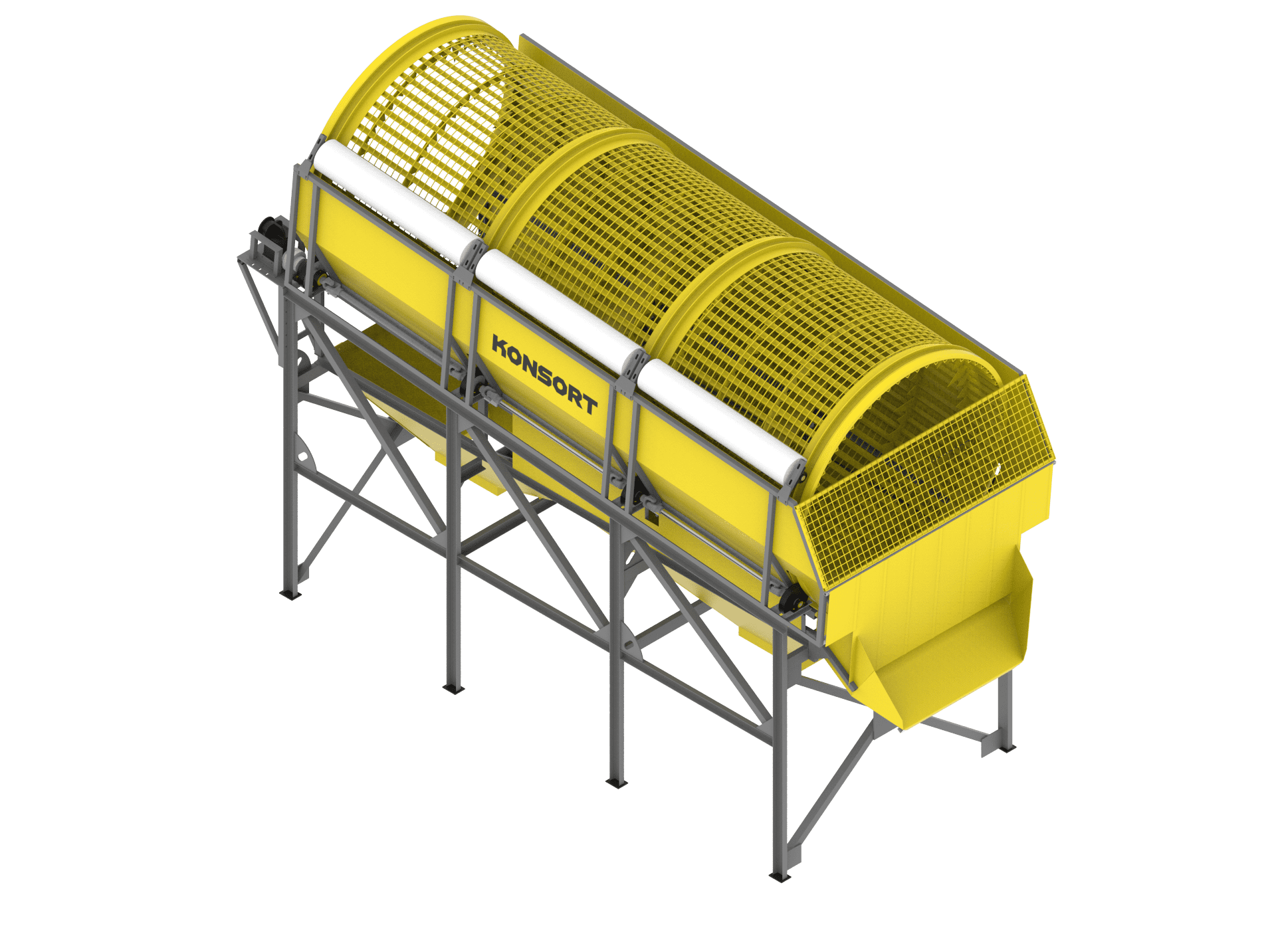
The KONSORT rotary grader(https://konsort.com.ua/catalog/kalibrator-rotornyj/) receives unsorted walnuts into a hopper and feeds them evenly into a drum, which distributes the products into size fractions. In the manufacturer’s technical specification, walnuts are directly listed among the products for which this model is intended — along with apples, peaches, plums and apricots. Standard grader fractions: 27 mm, 30 mm, 32 mm, 35 mm and 38 mm, grading accuracy — up to ±2 mm. The body is made of food-grade stainless steel AISI 304, which complies with HACCP standards.
A uniform batch by size is valued more highly than a mixed one, especially if walnuts are sold whole, in-shell.
- Cracking (if required)
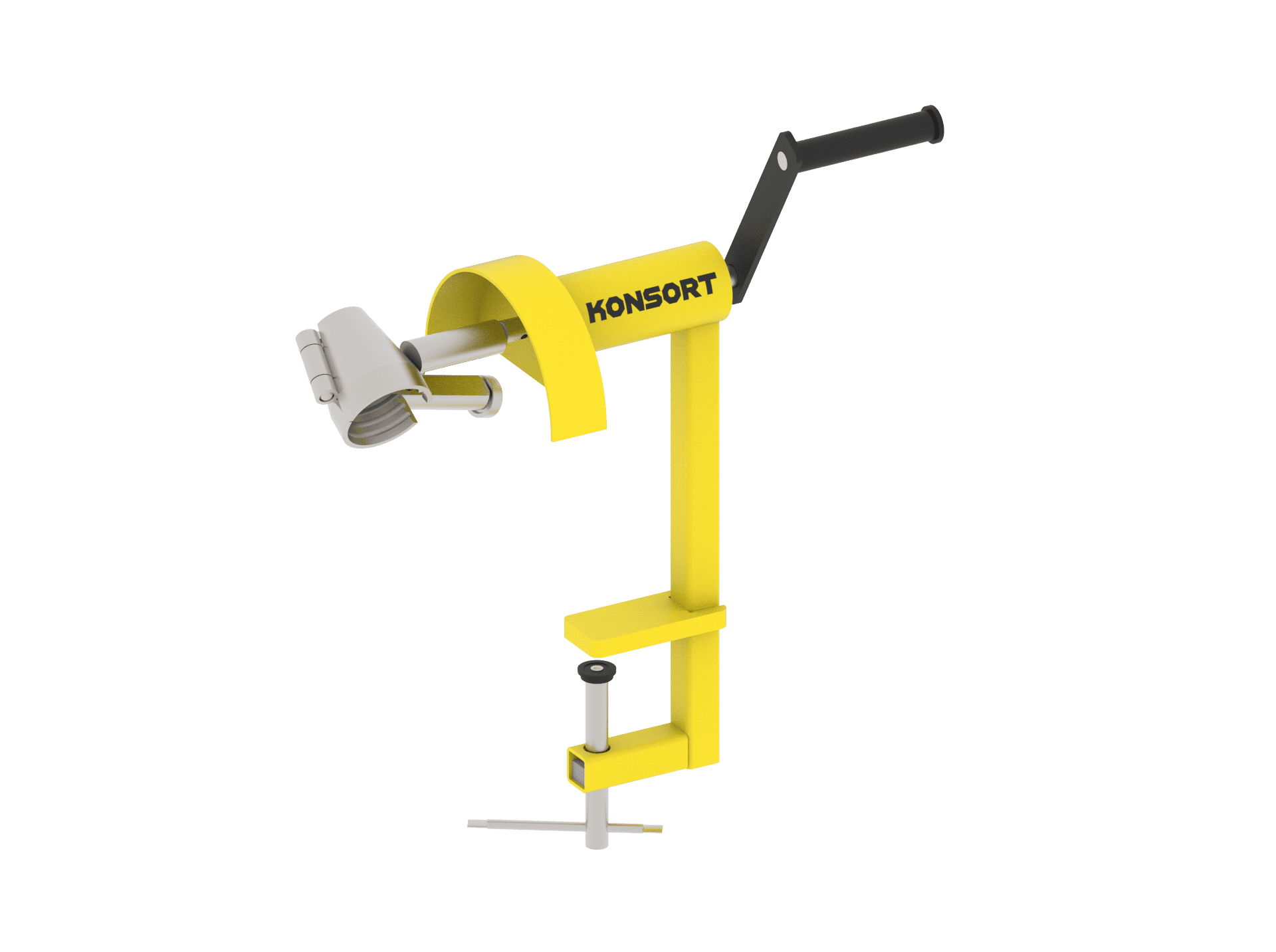
If the final product is cleaned kernels rather than in-shell walnuts, the next unit is a walnut cracker(https://konsort.com.ua/catalog/gorihokol/?srsltid=AfmBOooI069Qnv-ry0Ky5zJKU9LQOCsZSiNoG4OXx_jjGc0wBBAAn1kf) . Industrial walnut crackers are designed for gentle cracking with a high percentage of whole kernels at the output (without cracking the kernel itself), which directly affects the selling price — whole kernels cost significantly more than halves or crumbs.
- Aspiration and kernel sorting
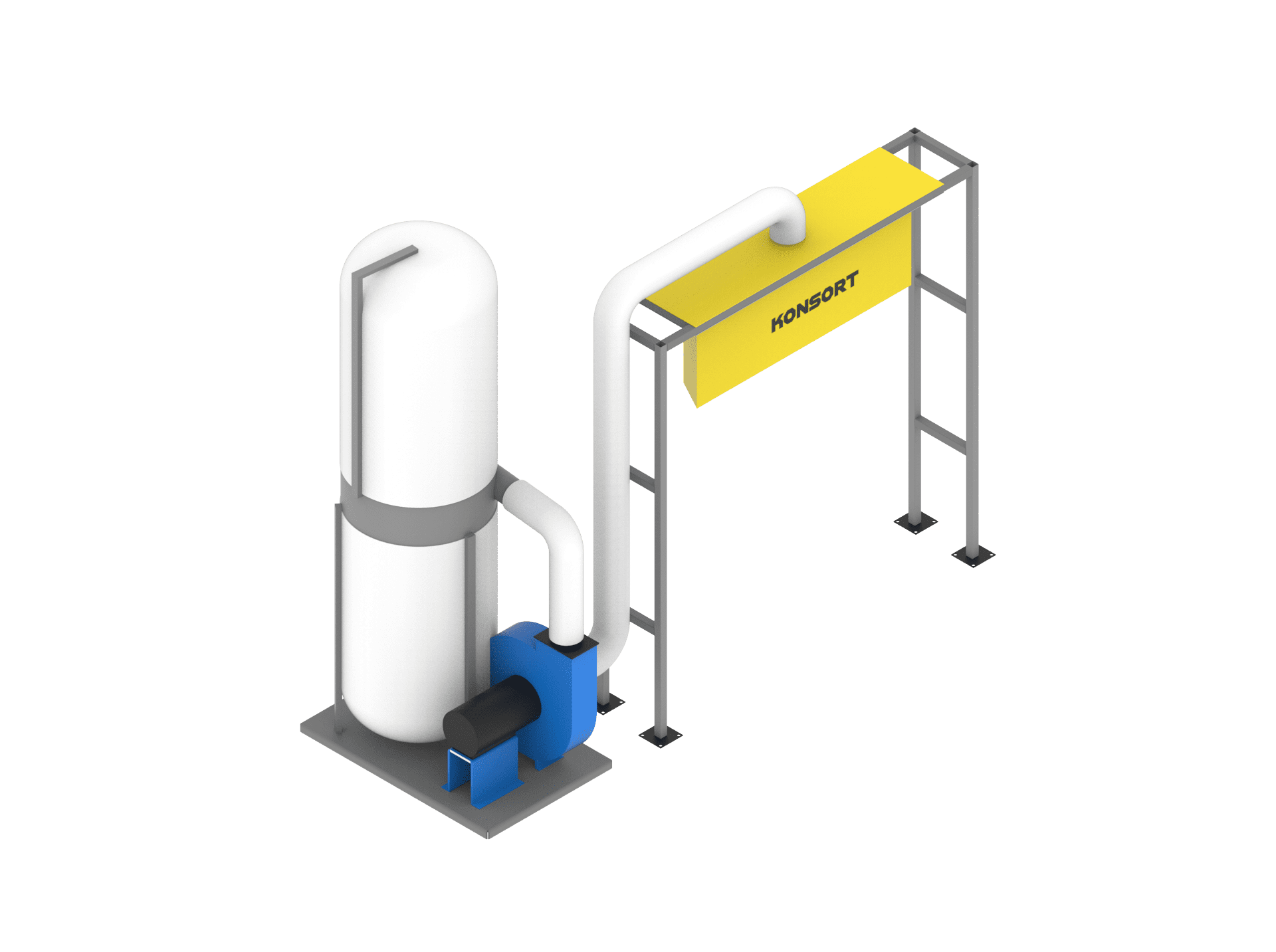
After cracking, the kernel must be separated from the shell and internal partitions. The KONSORT aspiration column (https://konsort.com.ua/catalog/aspiracziya-kolonka/) removes light shell particles, dust and fine debris with an air flow: the product passes through a vertical channel with adjustable draft, the heavier fraction (kernel) settles, while lighter impurities are discharged through a dust separator or cyclone. According to the manufacturer, aspiration increases product quality and grade by up to 80% and reduces the share of manual sorting. Next, a vibrating sieve with screens of different aperture sizes separates the kernels into fractions: halves, quarters and finer crumbs.
- Inspection table
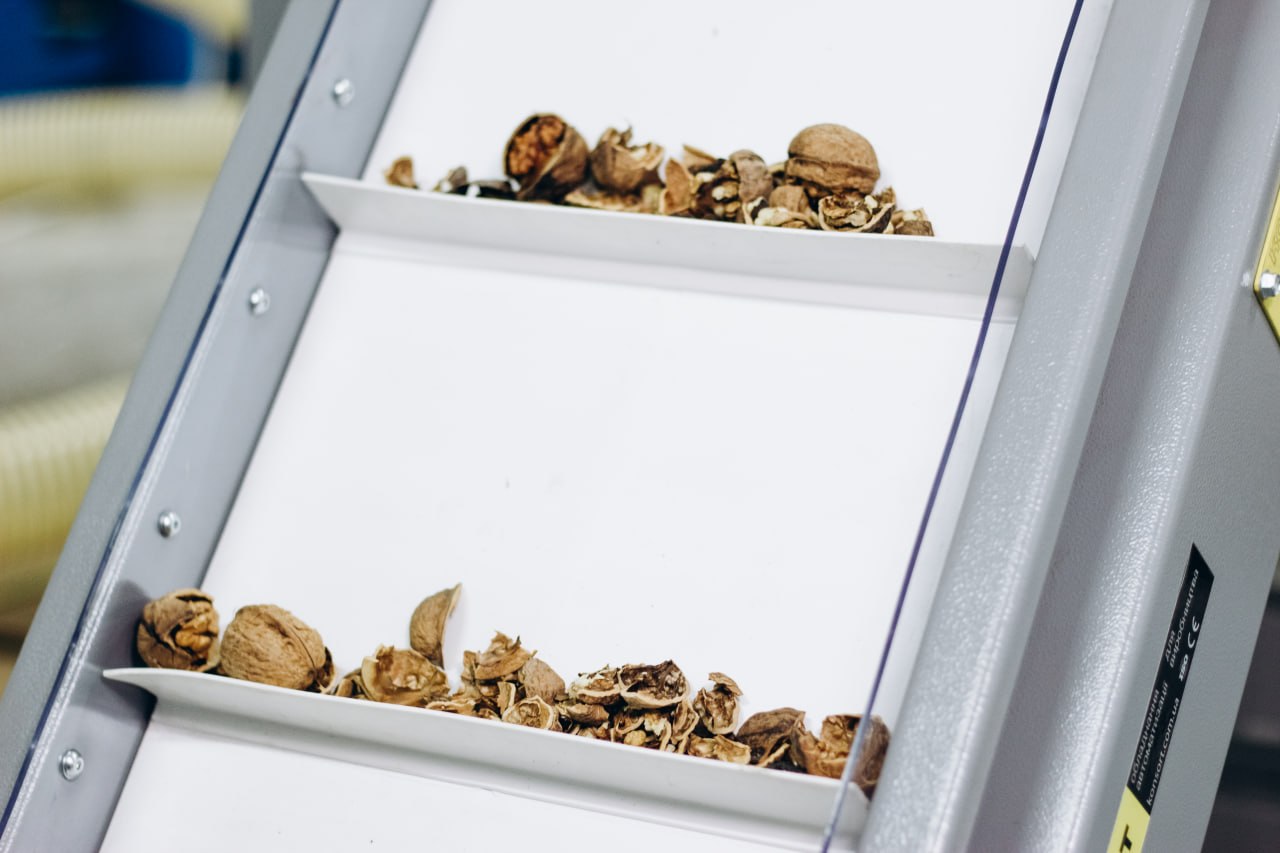
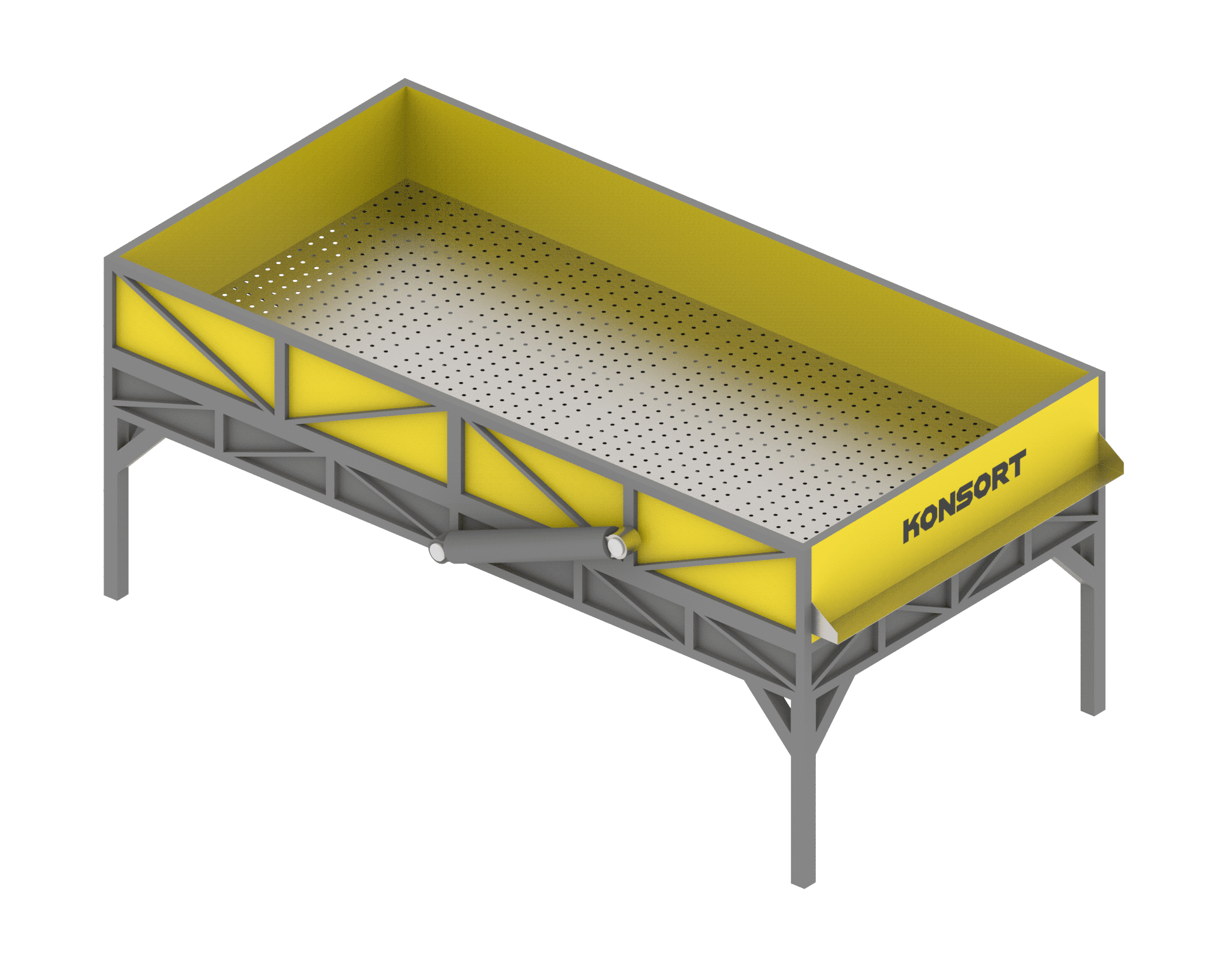
Final manual or semi-automatic sorting on a conveyor inspection table — operators reject darkened, damaged or empty kernels before packaging. Here, automation does not completely replace the person but frees them from transporting the product, leaving exactly the operation where visual judgement is required.
⸻
The sales format determines which equipment is required
| Sales format | Mandatory stages | What to pay attention to |
|---|---|---|
| In-shell walnuts, unsorted | harvesting, husk removal, washing, drying | washer and dryer capacity for the peak of the season |
| In-shell walnuts, graded | + rotary grader | number and size of fractions according to buyer requirements |
| Cleaned kernels | + cracking, aspiration, kernel sorting, inspection | percentage of whole kernels at the output — the main indicator of cracking profitability |
⸻
How to calculate the capacity of a walnut processing line
It is not enough to focus on the total procurement volume for the season — it is important to know the peak capacity during the busiest harvesting days.
Calculation example. A procurement point receives 5 tonnes of walnuts during a 10-hour working day. 5 t ÷ 10 h = 0.5 t/h (500 kg/h) — each unit of the line should be selected precisely for this peak hourly capacity, not for the average load over the entire season.
If one of the units (for example, the dryer is designed for daily processing of 1 t rather than for receiving 500 kg every hour throughout the day) cannot keep up with this rate, it will determine the actual capacity of the entire line — regardless of how fast the grader or washer is.
⸻
7 parameters for equipment selection
- Procurement volume and peak capacity. Specify not only the total seasonal volume, but also tonnes (or kilograms) per hour during the busiest period.
- Sales format. Unsorted in-shell, graded in-shell or cleaned kernels — this determines which units of the line are needed at all.
- Number of grading fractions. How many separate size fractions need to be obtained at the output and where each of them will be directed next.
- Availability of premises. Length and width of the area for the line, ceiling height, availability of access for unloading the harvest.
- Peak daily load. Walnut harvesting is uneven — days with maximum intake must be taken into account rather than the seasonal average.
- Method of final kernel cleaning. If cracking is planned, it is important to determine the required percentage of whole kernels at the output from the outset — this affects the choice of walnut cracker model.
- Possibility of expansion. If procurement volumes grow from year to year, a reserve capacity of the dryer and grader should be built in already at the first project stage.
⸻
Typical mistakes made by procurers
Calculation based on average rather than peak capacity
The average load for the season does not show the actual peak during mass harvesting days. The line must be calculated specifically for the peak; otherwise, on the busiest days, the product accumulates and spoils while waiting for processing.
Delay in removing the green husk
Every extra day between harvesting and cleaning increases the risk of mould and shell darkening — and therefore reduces the selling price of the entire batch.
Purchasing equipment without coordinating capacity between units
A fast grader does not compensate for a slow dryer — the capacity of the entire line is always equal to the capacity of its slowest section.
Lack of grading before sale
A mixed-size batch is always sold more cheaply than a sorted one — regardless of the procurement volume, grading pays off.
Ignoring enhanced export control requirements
Since December 2024, in-shell and shelled walnuts have been included in the list of goods subject to enhanced export control — this increases the requirements for quality and documentary support of batches intended for sale abroad.
⸻
How much walnut processing equipment costs
The exact cost depends on the procurement volume and product format, but as a guideline:
| Equipment | What it is used for | Capacity / parameters | Price |
| Rotary grader | separation of walnuts into size fractions |
fractions 27/30/32/35/38 mm, accuracy ±2 mm, motor 1.5 kW, rotor diameter 630 mm, overall length 5,500 mm, drum wall thickness 4 mm. |
from UAH 190,000 |
| Aspiration column | removal of light impurities (dust, shell) by air flow |
Motor power, 2200 W. Outlet diameter, 305 mm. Inlet diameter, 150 mm. Number of inlet openings, 3 x 100 Air flow speed, m3 / min 65.09 Bag diameter, 500 mm. Filter bag height, 850 mm. Waste collector height, 1100 mm. Bag volume, 0.4 m3 Dimensions L x W x H, 1450 x 800 x 2250 mm. Net / gross weight, 53/58 kg . Package size, 1170 x 560 x 570 mm. |
from UAH 50,000 |
| Roller grader | alternative for grading rounded fruits |
dimensions 3320×2350×1850 mm capacity up to 10 t/h. chute unloading height 1,950 mm. conveyor unloading height 1,230 mm. working belt width 1,200 mm. total power consumption 3.85 kW. electricity consumption 3.85 kW |
from UAH 590,000
|
| Washer-separator | removal of green husk from walnuts |
Grader type – rotary; Capacity – 1000 kg \ h; At the beginning of the washer there is a receiving hopper that evenly feeds the walnuts into the washing drum for further removal of the green husk. Cleaning takes place using an installed nozzle system through which water is supplied. After cleaning, the green husk exits through a separate special opening located under the drum, while the cleaned walnuts move further onto the conveyor through a special chute. Construction material: structural steel. Coating – powder baking. Connection 220V / 380V |
From UAH 180,000 |
| Walnut dryer | controlled drying after washin |
Overall dimensions 2,000*1,000 mm. Heater power 12 kW. Gear motor 1.1 kW., Neri Mototri, Italy Air temperature 55 – 62 °C. |
From UAH 300,000 |
| Walnut cracker | cracking with maximum whole-kernel yield |
Overall dimensions 1,700*900*940 mm. Capacity up to 200 kg/h. Percentage of whole kernels up to 80% Motor power 1.5 kW. |
From UAH 80,000 |
| Vibrating sieve | sorting kernels into fractions (halves, quarters, crumbs) |
The vibrating sieve is equipped with three screens with overall dimensions of 1250 mm × 2500 mm. Screen aperture sizes 6 mm, 16 mm, 20 mm. Hopper with a volume of 200 kg. At the end of the vibrating sieve, outlet chutes for 3 fractions are located. The outlet for the 4th fraction is located under the vibrating sieve body. The vibrating sieve is equipped with a 0.55 kW vibrator manufactured in Italy. Power supply 380V. Installation weight not more than 350 kg. Capacity 1000 kg / h. |
From UAH 120,000 |
| Inspection table | final sorting before packaging |
nspection table: horizontal, frame-type, stationary Belt type: white PVC, 2 mm thick. Dimensions: 4000 mm * 700 mm * 800 mm Flow dividers are made from profile tube 15. Belt speed is adjustable. Gear motor with a power of 0.55 kW, with frequency converter. Manufacturing metal: structural steel. Capacity 1000 kg per hour.
|
From UAH 200,000 |
What data is required to calculate the line
To receive a preliminary calculation, you do not need to select the model of each machine yourself. It is enough to prepare:
- approximate procurement volume for the season;
- peak daily or hourly capacity;
- final product format (unsorted in-shell, graded in-shell, kernels);
- required number of grading fractions;
- requirements for the percentage of whole kernels if cracking is planned;
- dimensions of the procurement facility;
- existing equipment already operating at your site;
- plans to expand volumes in the following seasons.
Based on this data, KONSORT engineers can select the sequence of operations and equipment for a specific volume. KONSORT designs and manufactures equipment for agricultural automation (https://konsort.com.ua/rishennyacat/rishennya-dlya-avtomatyzacziyi-silskogo-gospodarstva/*) *— from a separate grader or vibrating sieve to a complete walnut processing line, with installation and service support. The company previously published a comprehensive solution for sorting, processing and packaging walnuts (https://konsort.com.ua/sortuvannya-pererobka-ta-upakovka-voloskogo-goriha-rishennya-vid-konsort ) — the full catalogue of grading, washing and cleaning equipment can be viewed in the KONSORT product catalogue(https://konsort.com.ua/catalog/ ) .
⸻
Conclusion
Properly selected walnut processing equipment is not a set of separate machines, but one coordinated technological line in which the capacities of cleaning, drying, grading and cracking are balanced with each other. The difference between chaotic manual processing and such a line is the difference between selling “from the bag” at a lower price and selling a uniform batch at market value.
Planning to automate walnut processing?
📩 Submit a request for a calculation — KONSORT engineers will select an equipment configuration according to your procurement volume and product format.
📞 +38 (067) 116-50-25
⸻
❓FAQ: walnut processing equipment
What equipment is needed for walnut processing?
Basic set: a washer-separator for removing the green husk, a dryer, and a rotary grader for in-shell sorting. If the final product is kernels, a walnut cracker, aspiration system, vibrating sieve and inspection table are additionally required.
When does the walnut processing season start in Ukraine?
Walnuts ripen from late August to October depending on the variety and region. A sign of ripeness is cracks in the green husk around the fruit.
Why should walnuts not be left unprocessed for a long time?
Moisture in the husk and kernel creates conditions for mould, while the shell darkens — the batch loses its marketable appearance and value with every day of delay.
How to determine the required line capacity?
You should focus on the maximum flow during peak harvesting days, not the average volume for the season. The slowest unit in the line determines the capacity of the entire system.
Can walnuts be graded if the procurement volume is small?
Yes — even small batches of uniform size are sold at a higher price than mixed ones, so grading pays off at any volume.
What percentage of whole kernels is considered a good result when cracking?
Industrial walnut crackers make it possible to achieve up to 70% whole kernels at the output — this indicator directly affects processing profitability, since whole kernels cost significantly more than halves and crumbs.
How much does a walnut processing line cost?
The cost depends on the procurement volume, the format of the final product (shell or kernel), and the number of units in the line. A complete line is more appropriately calculated individually after receiving the initial data.